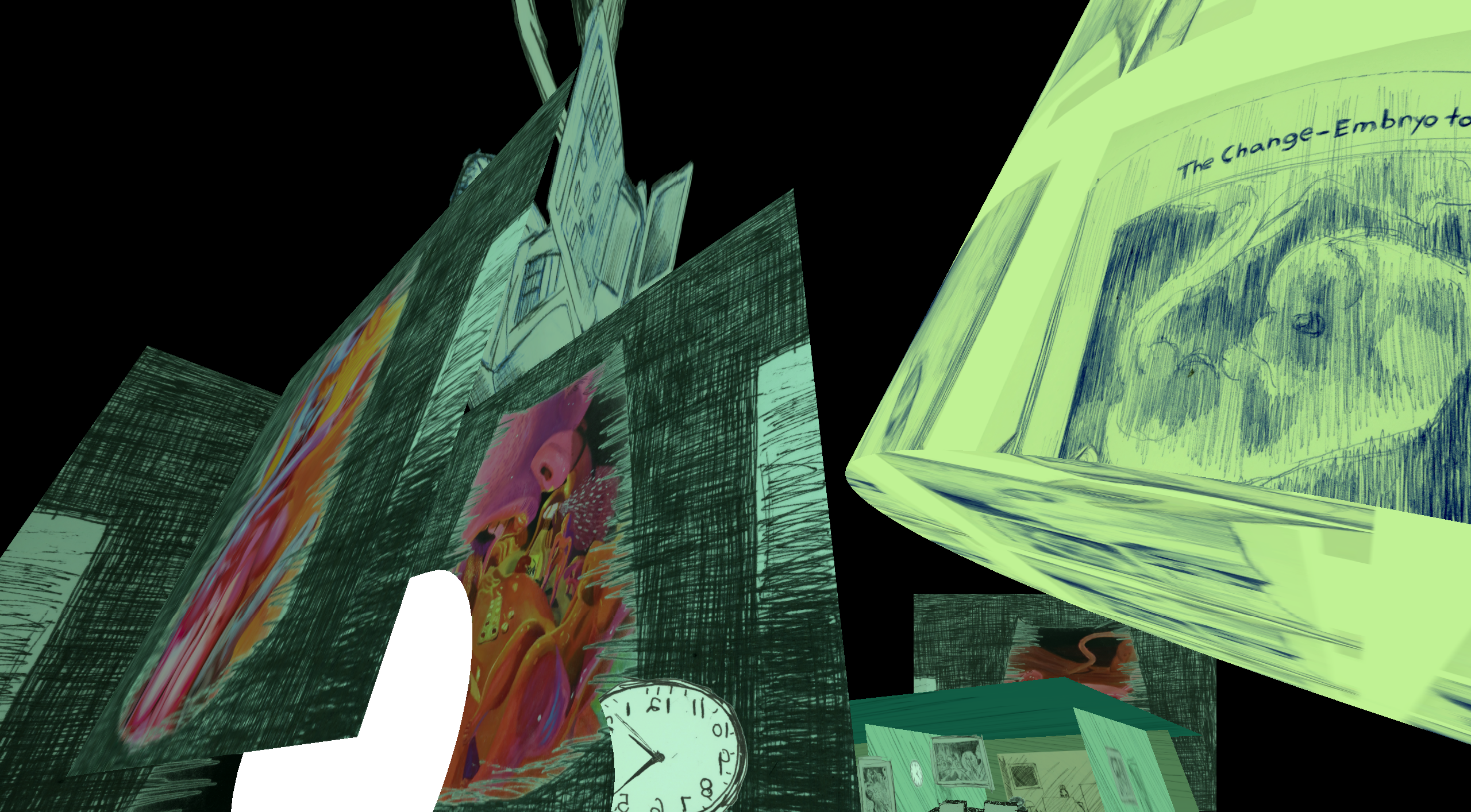
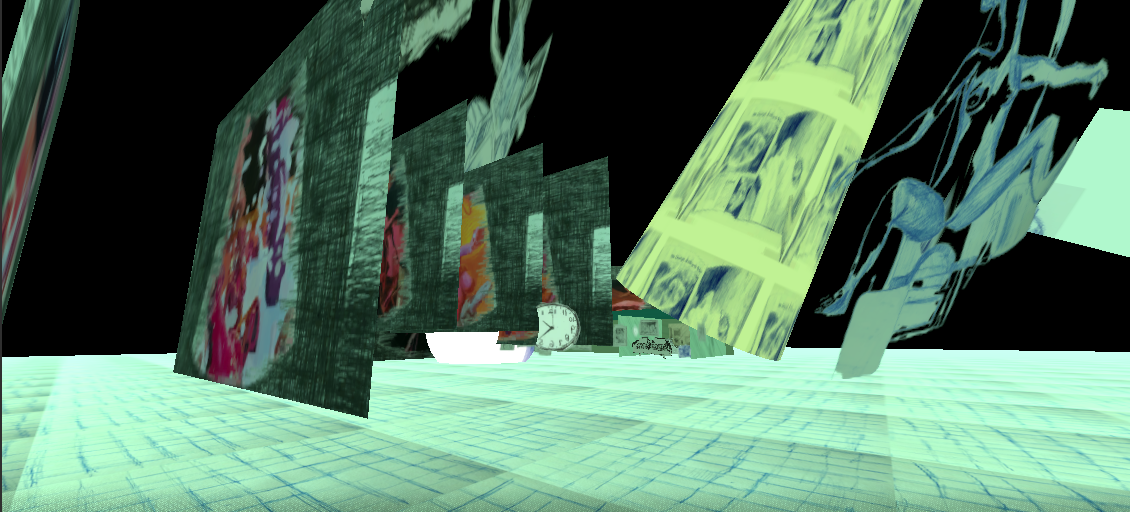
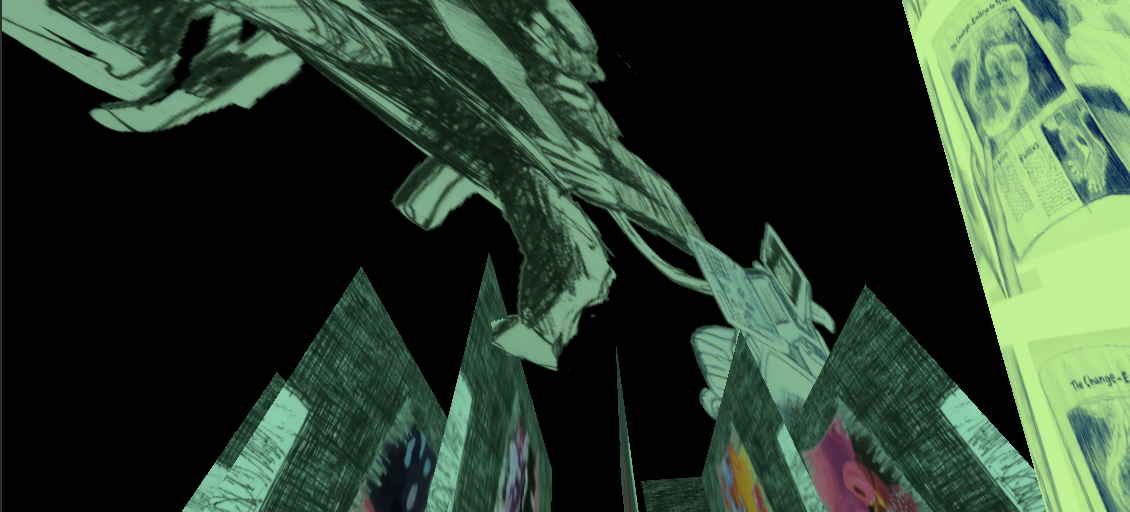
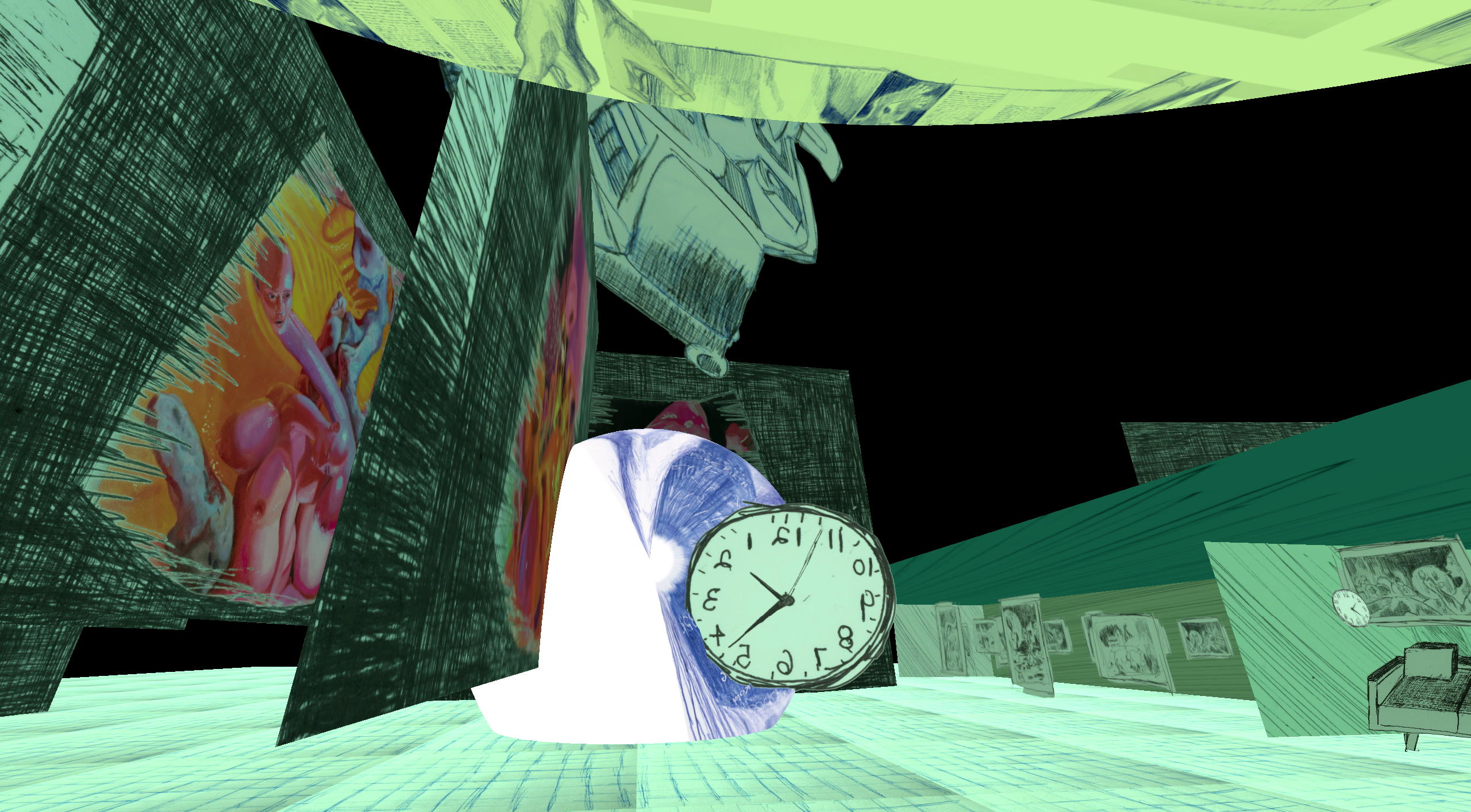
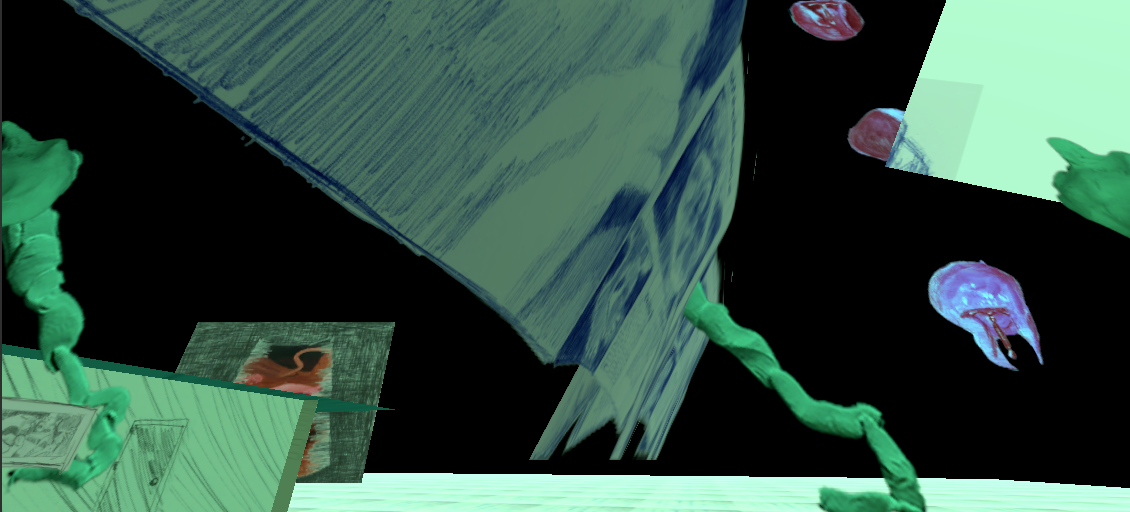
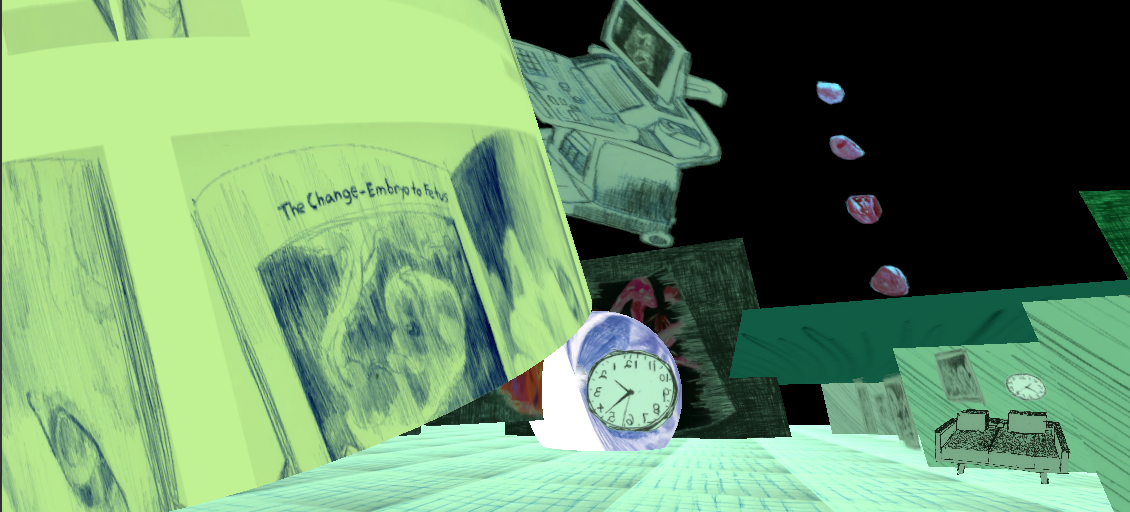
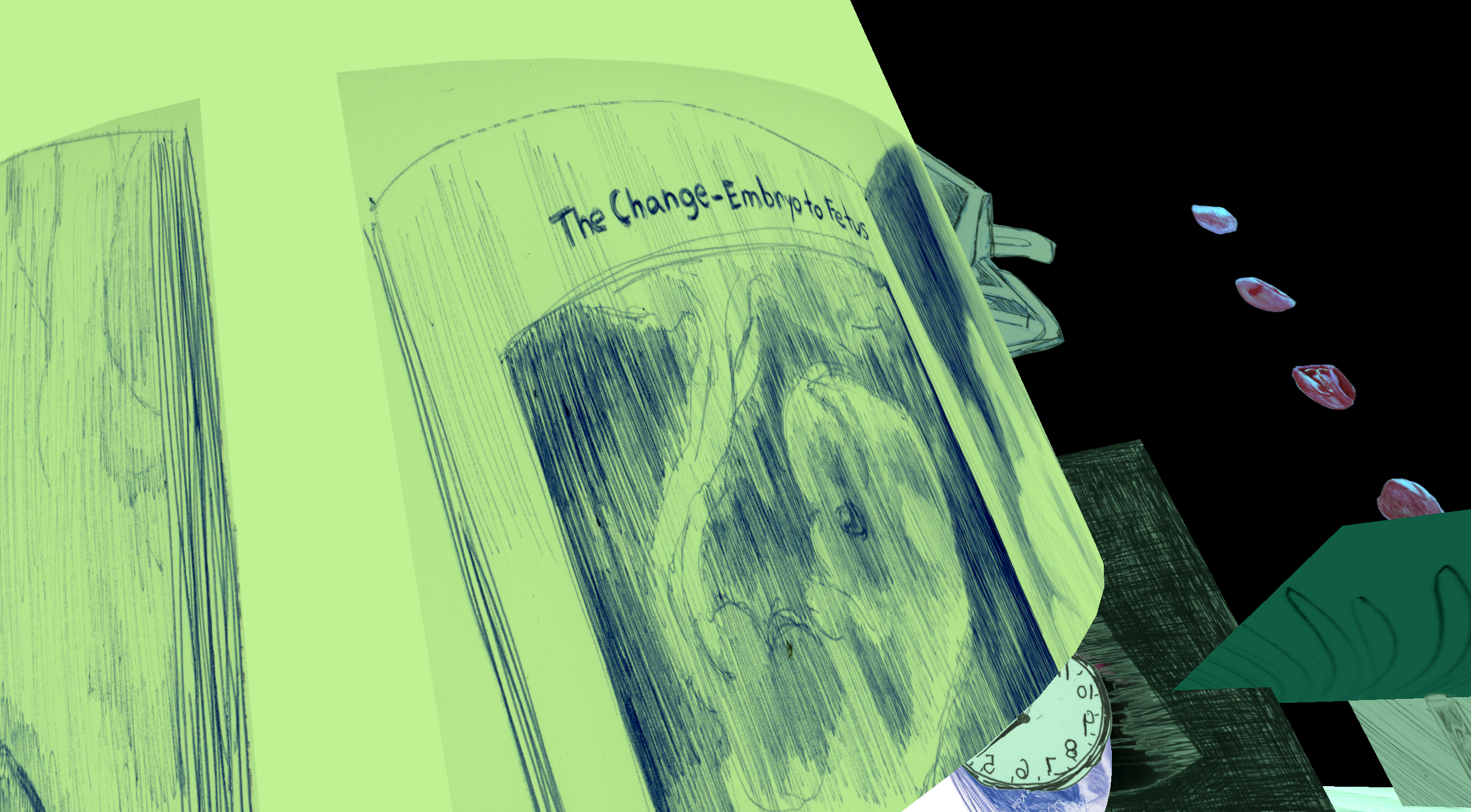
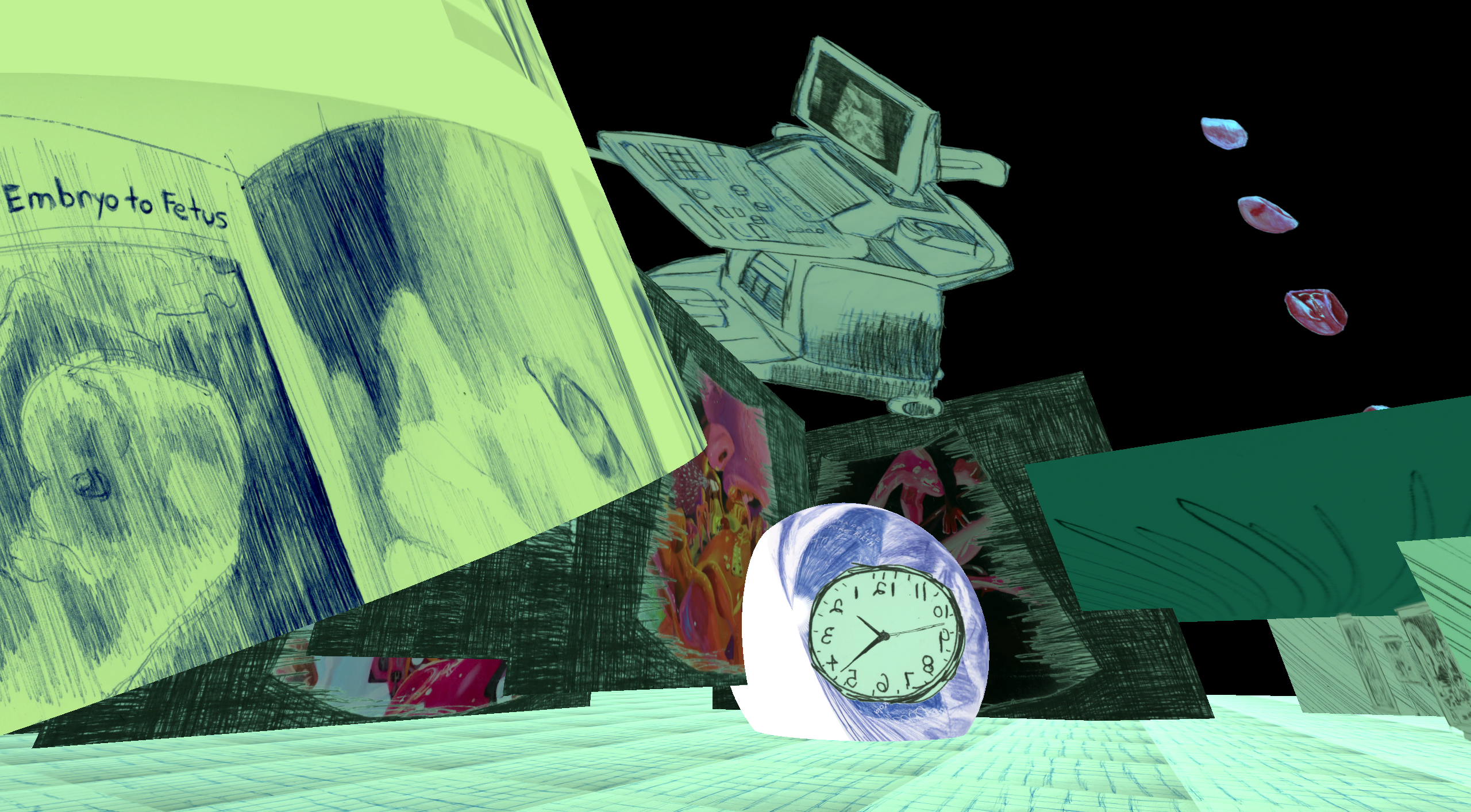
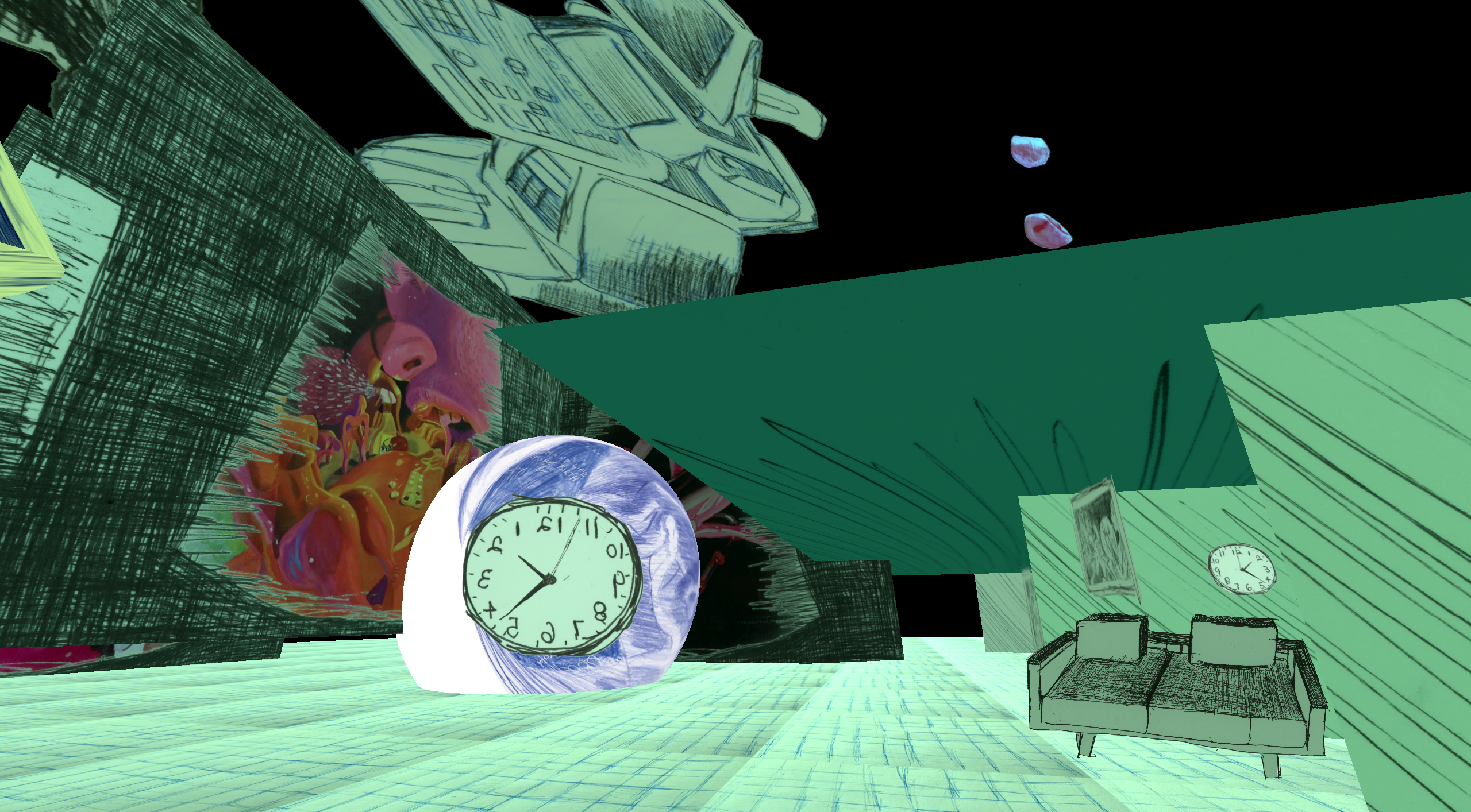
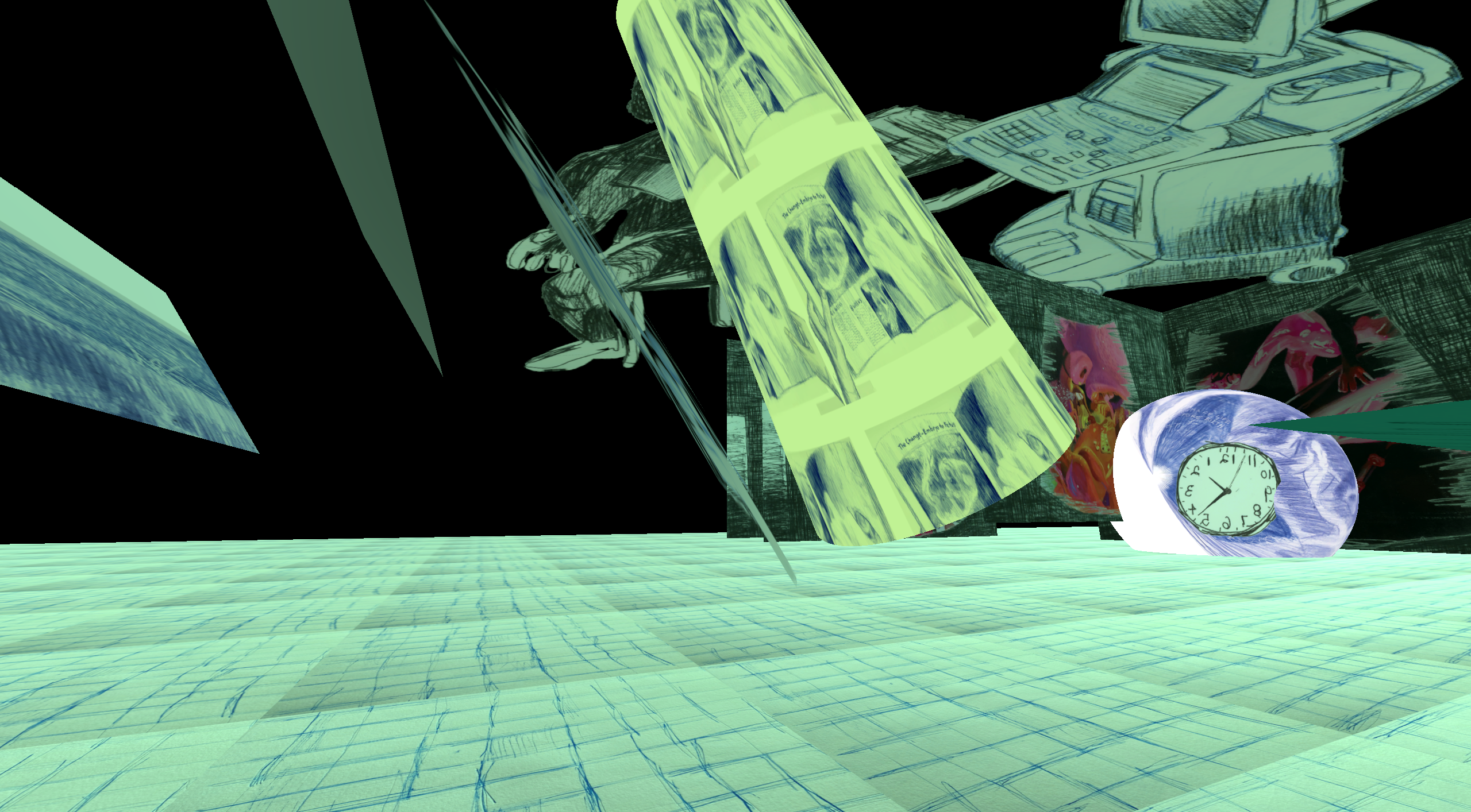
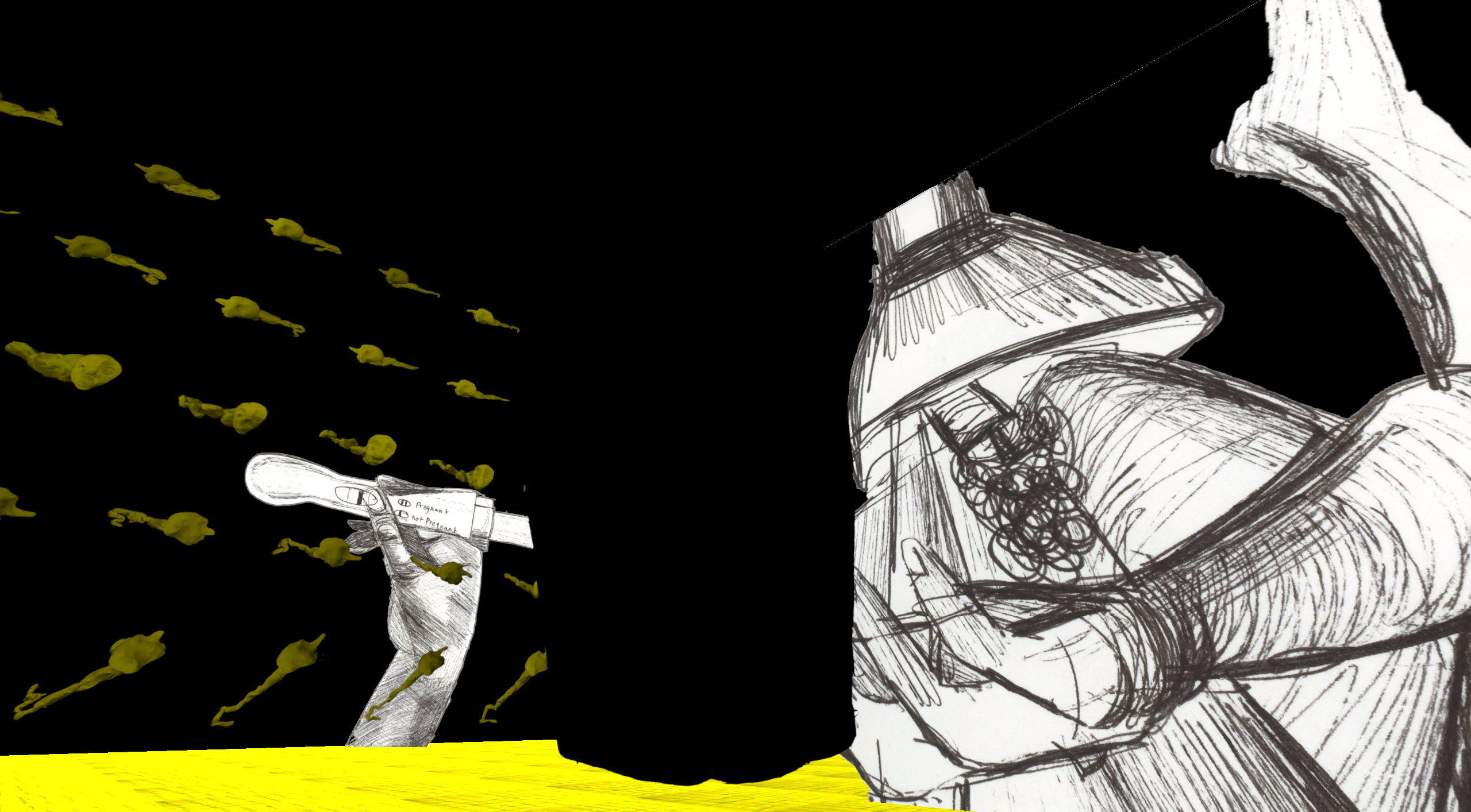
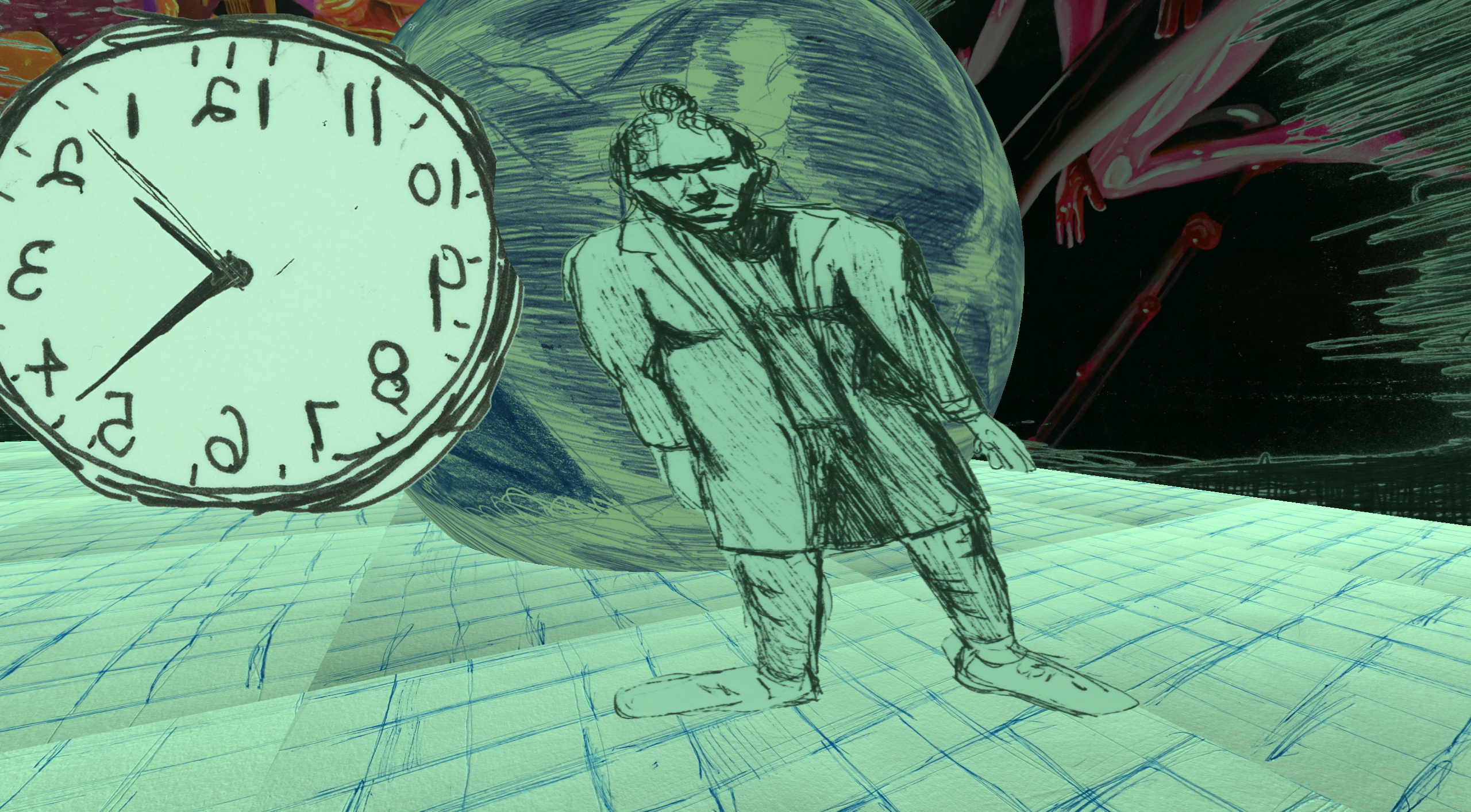
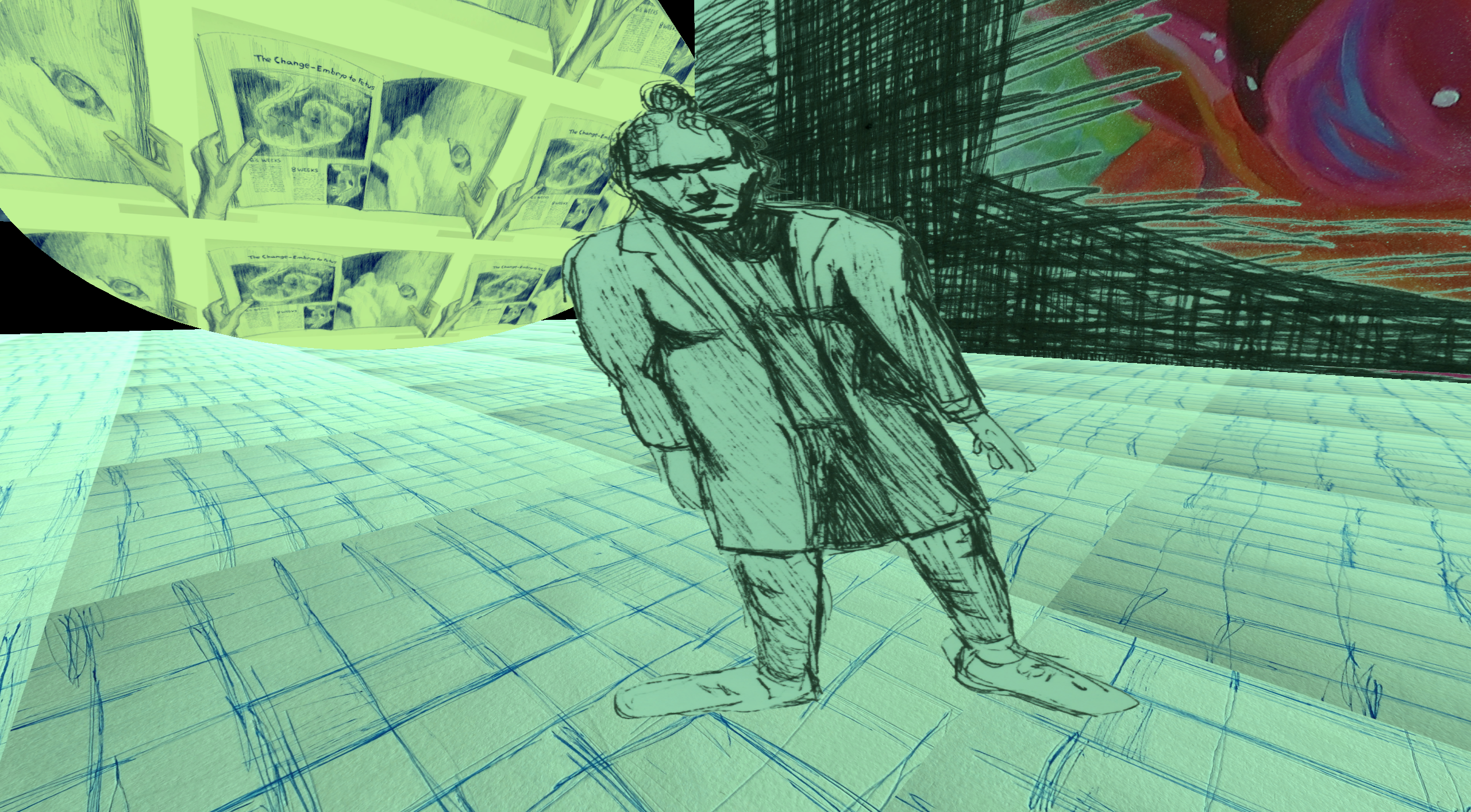
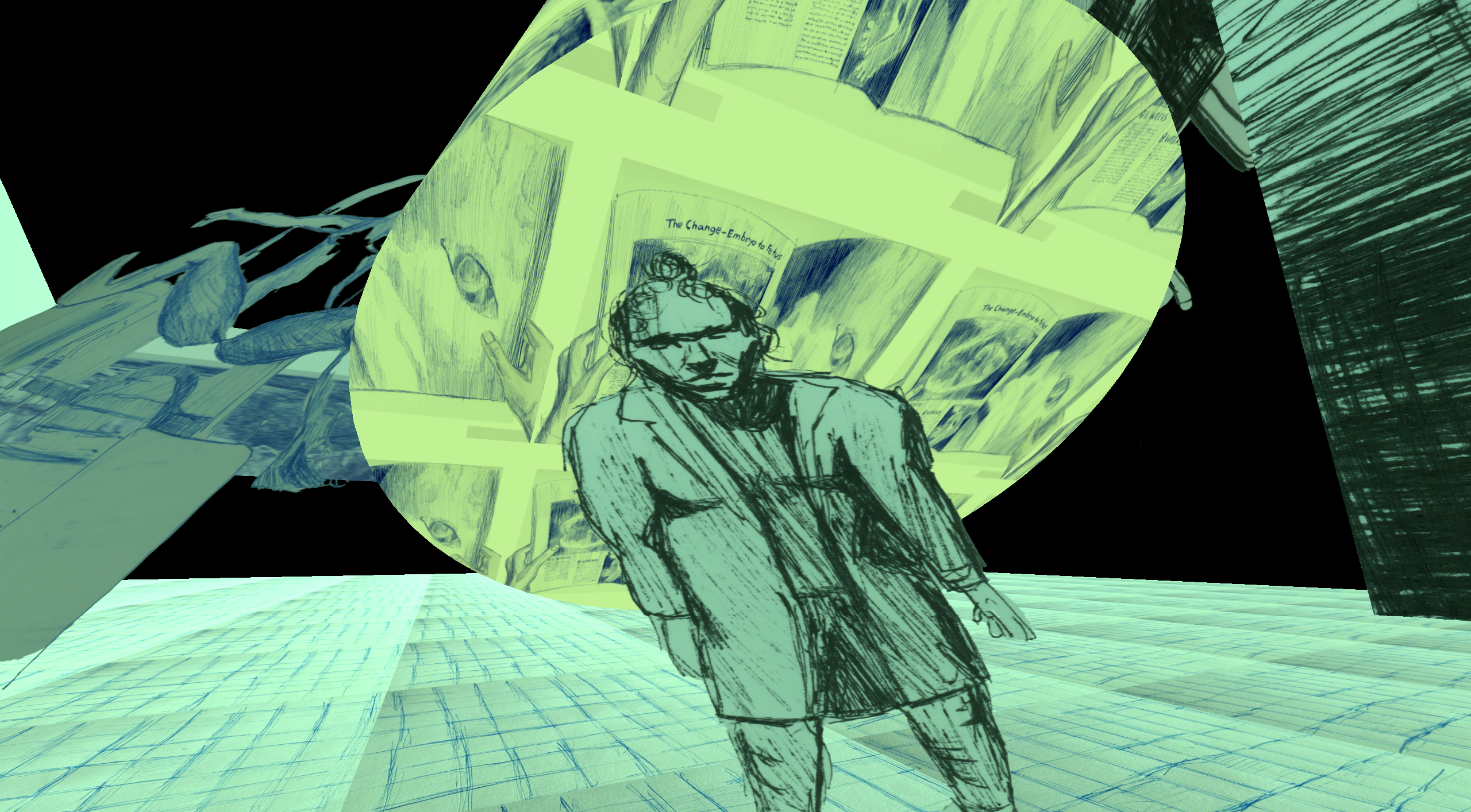
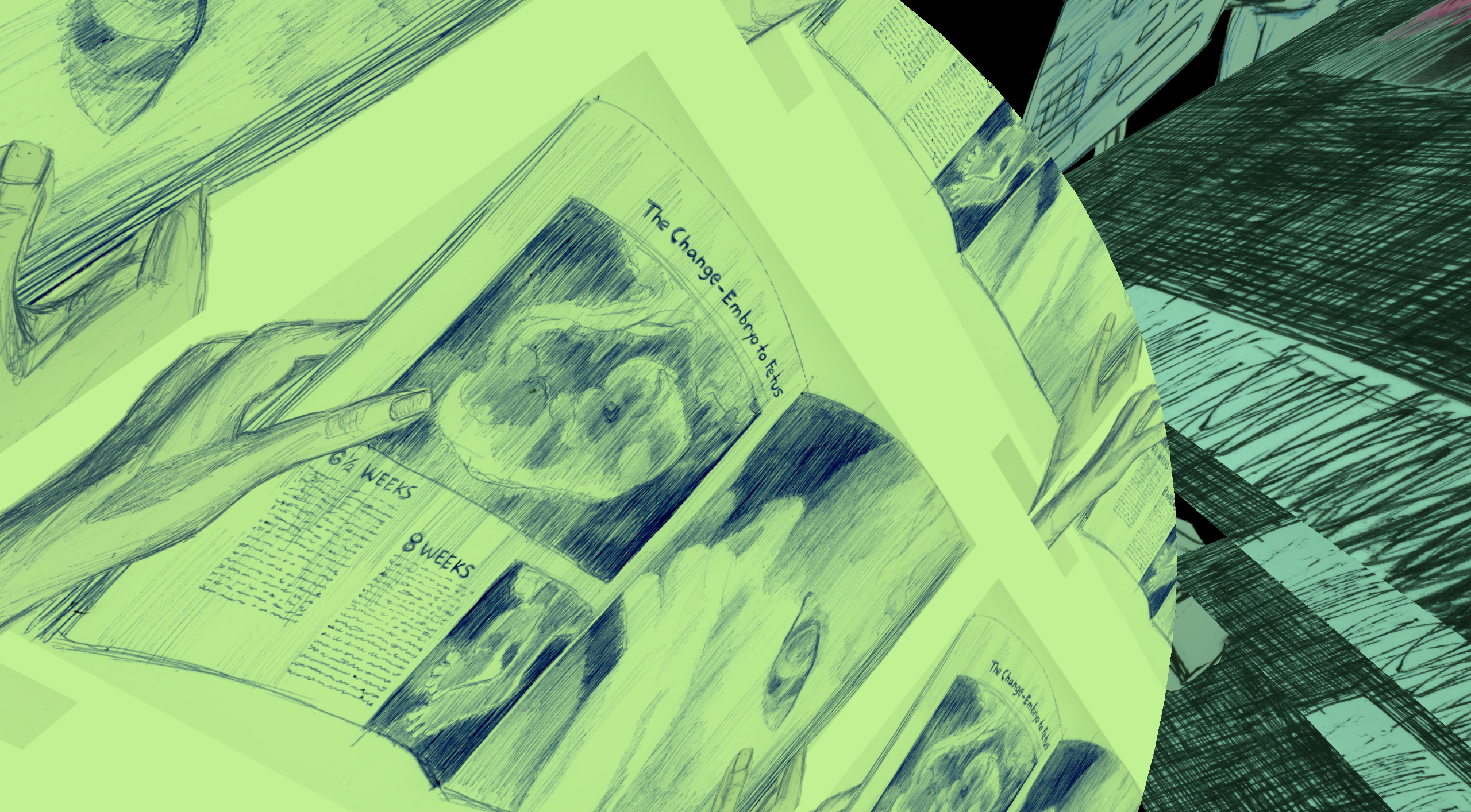
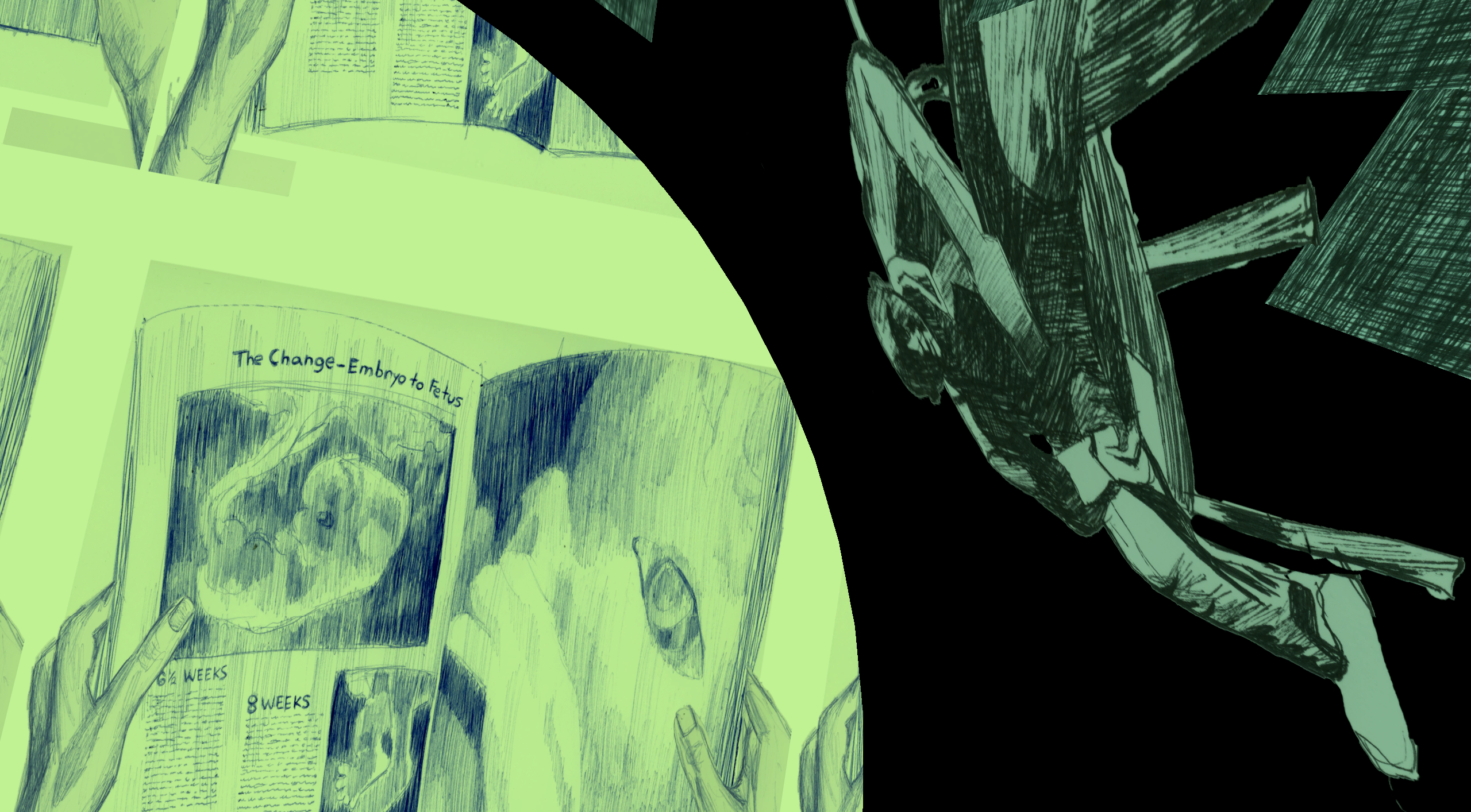
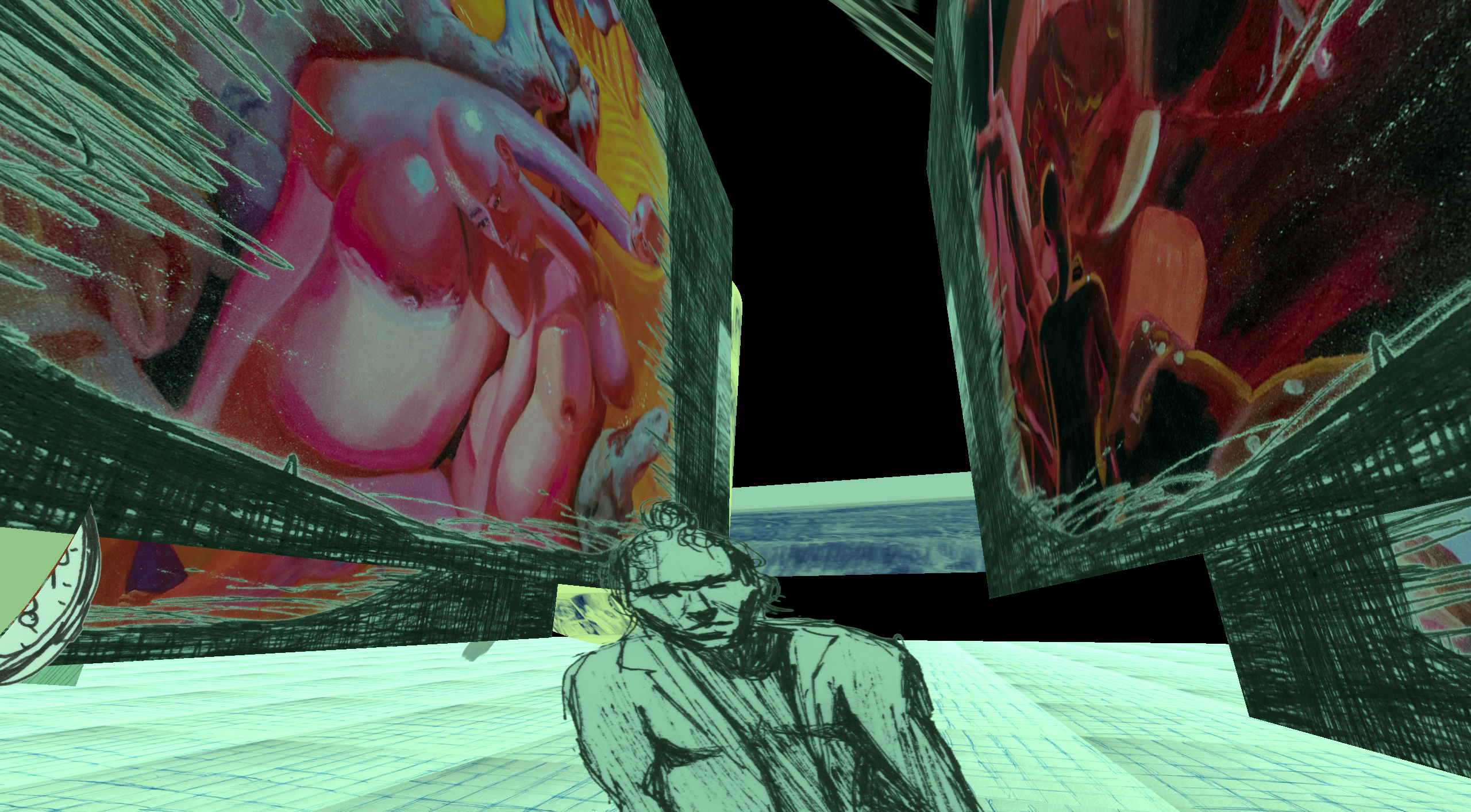
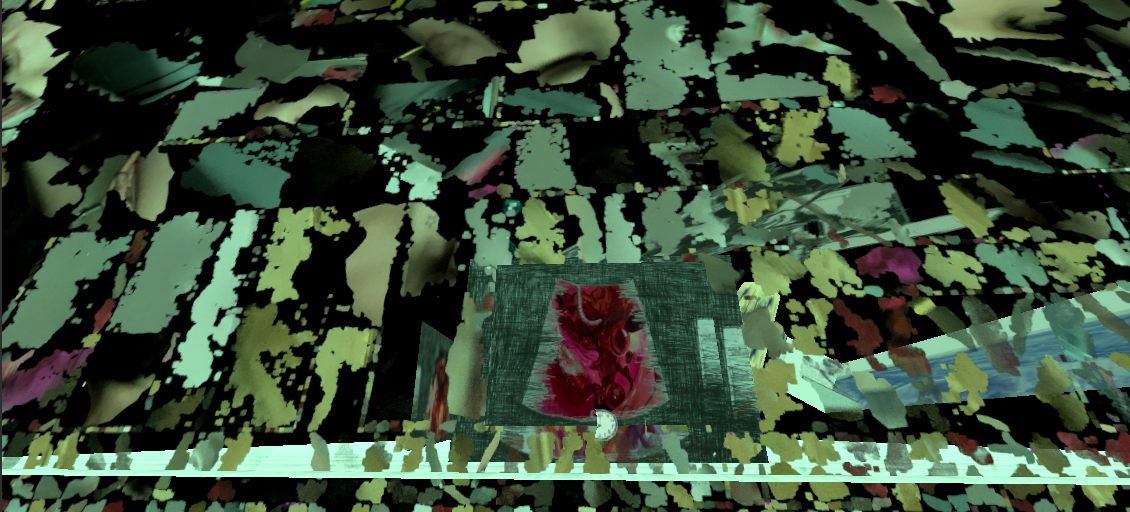
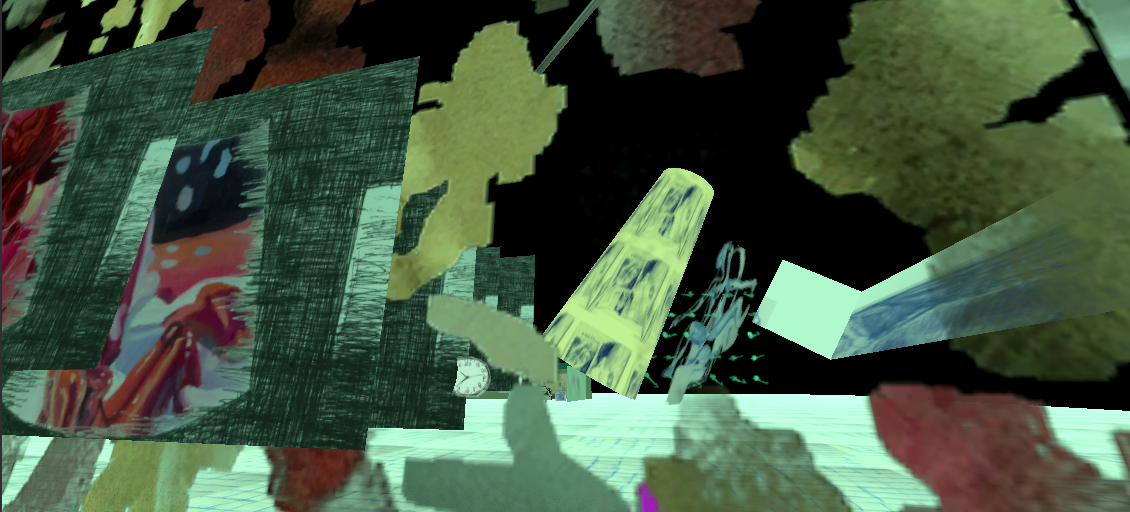
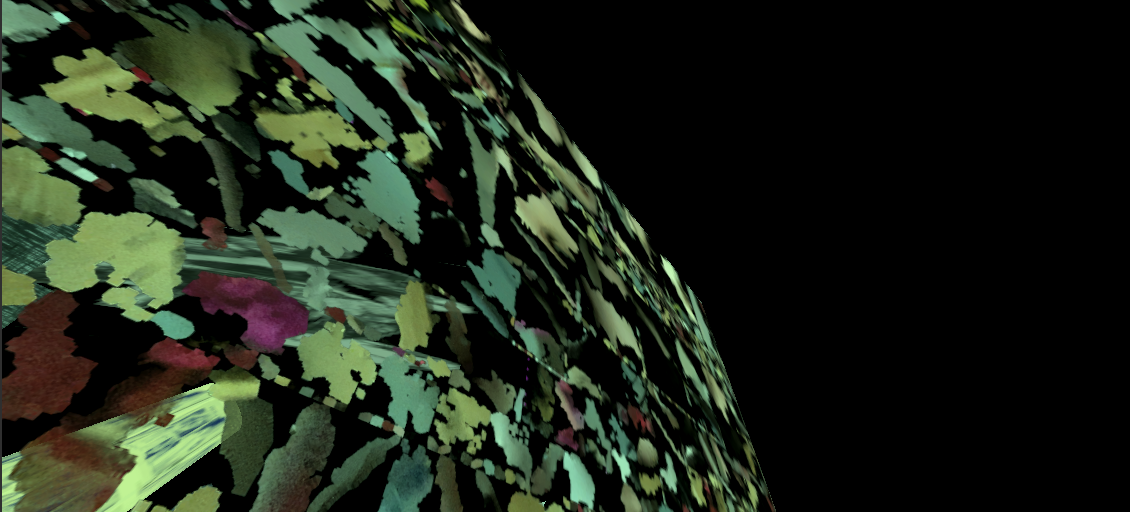
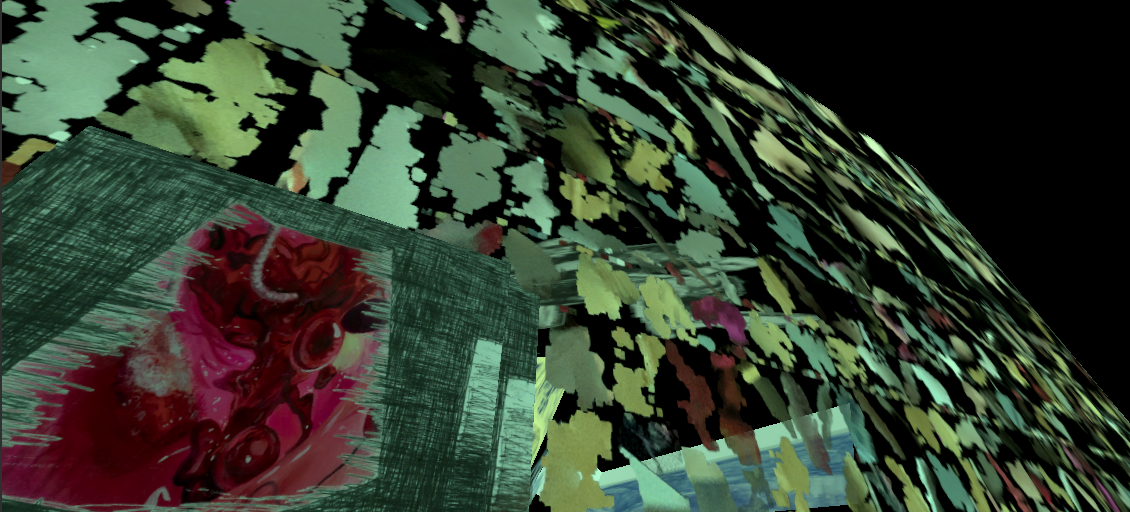
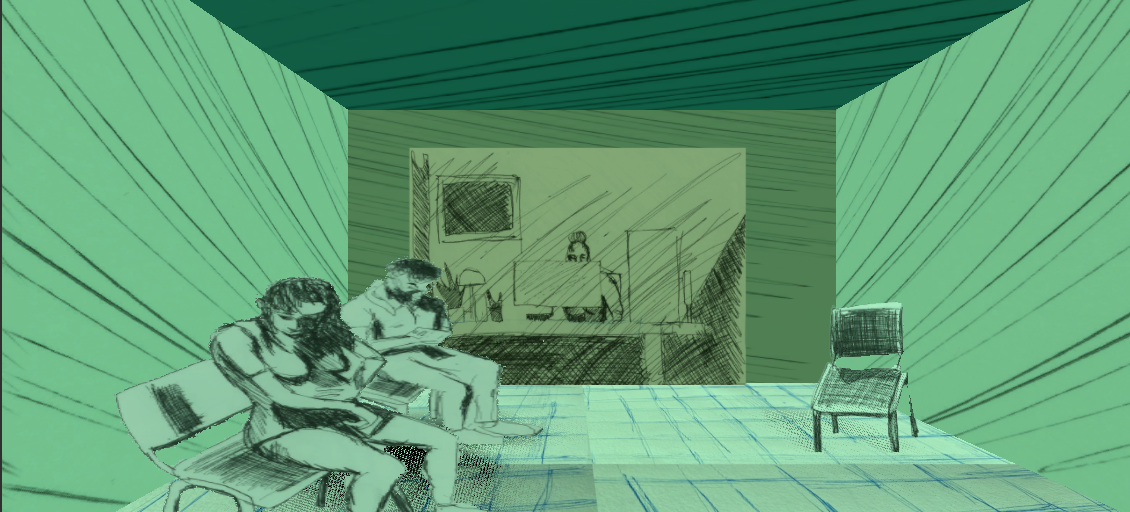
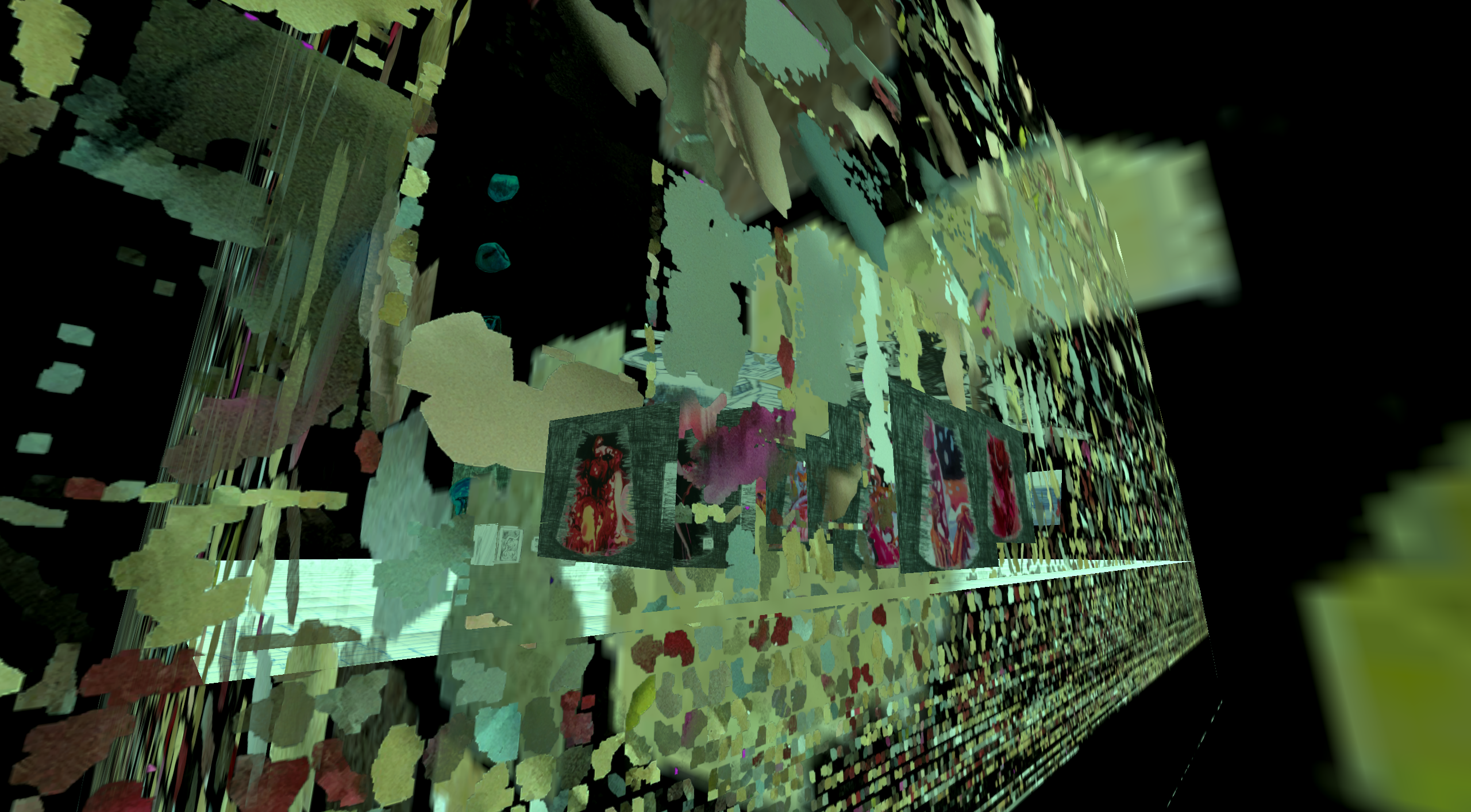
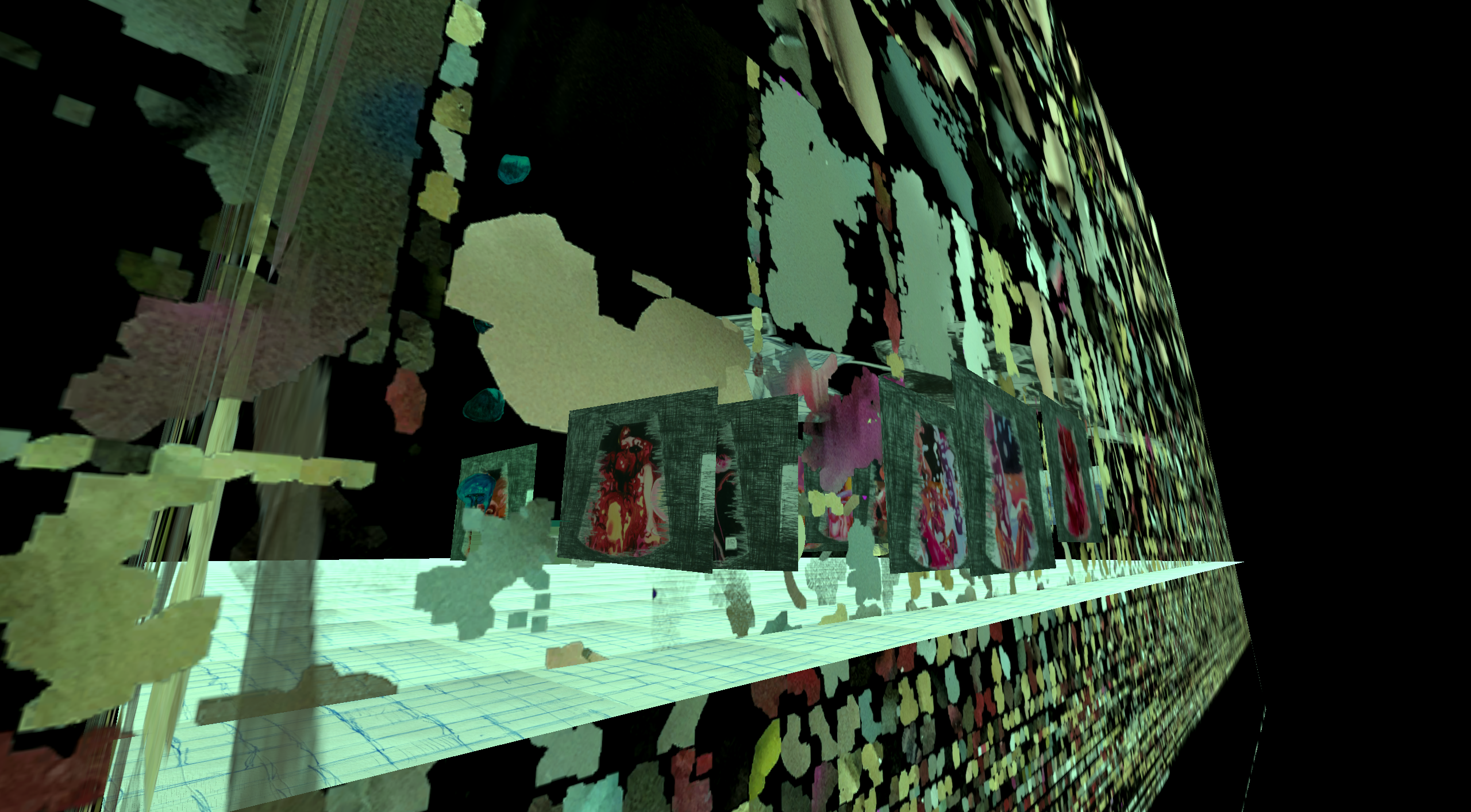
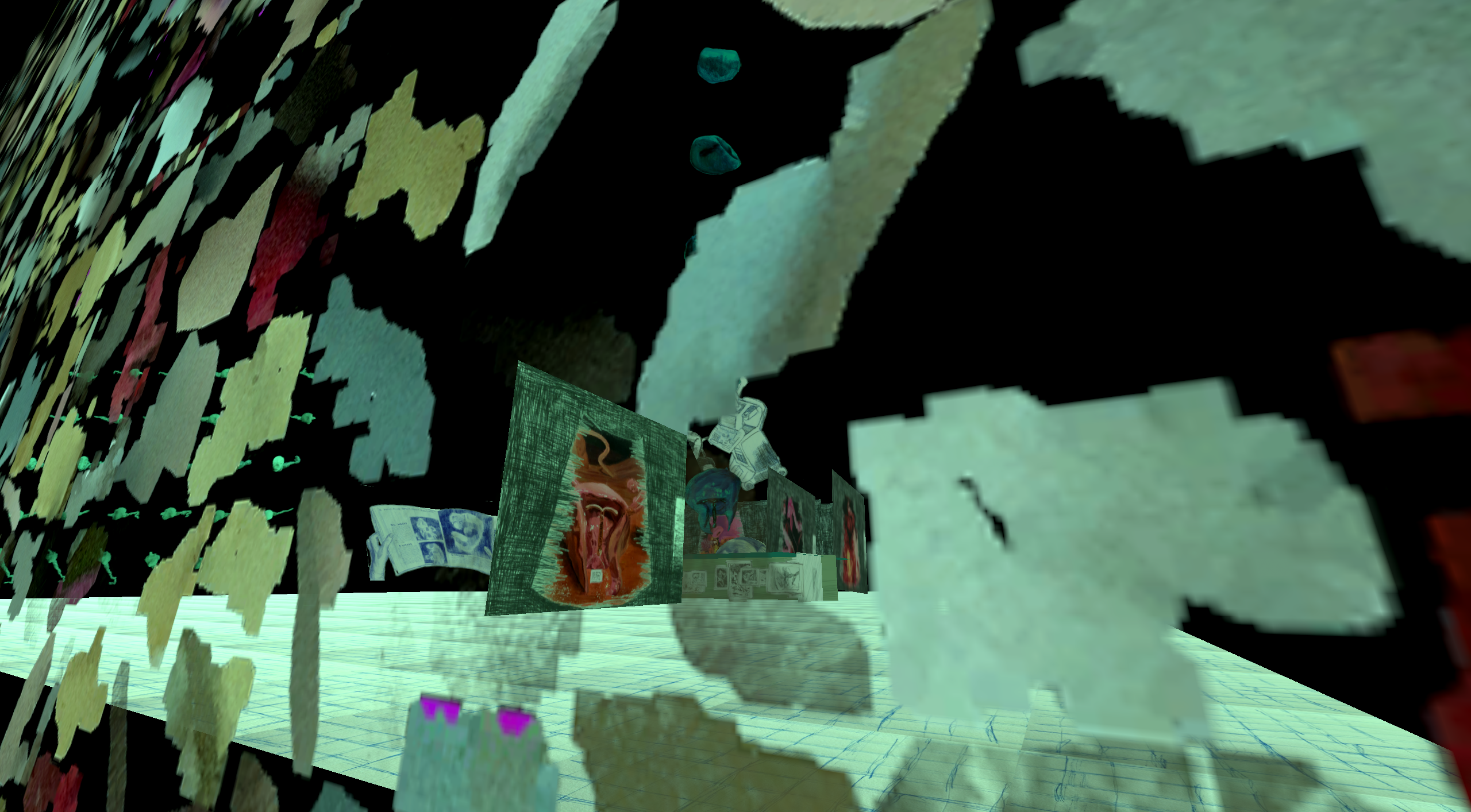
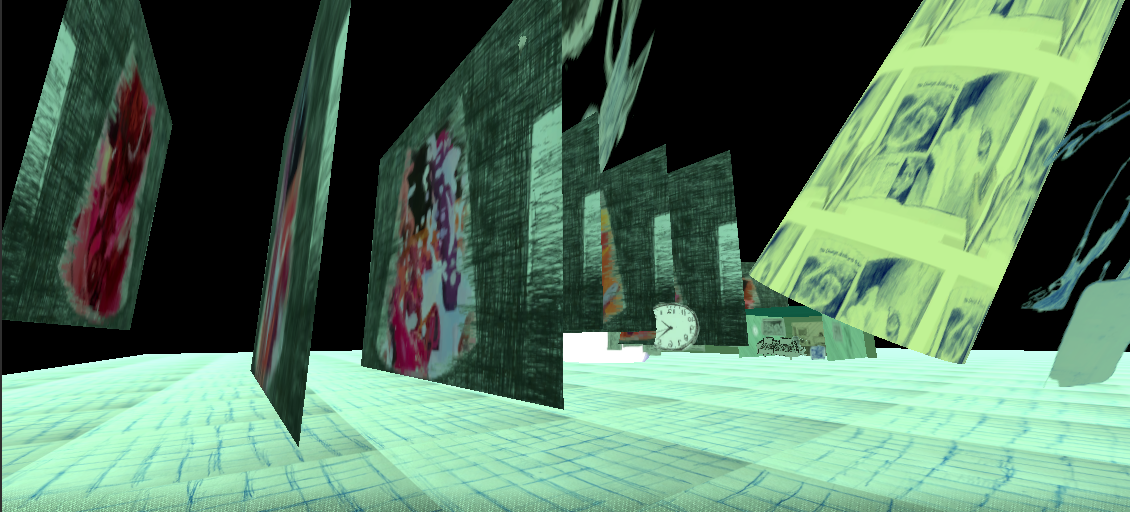
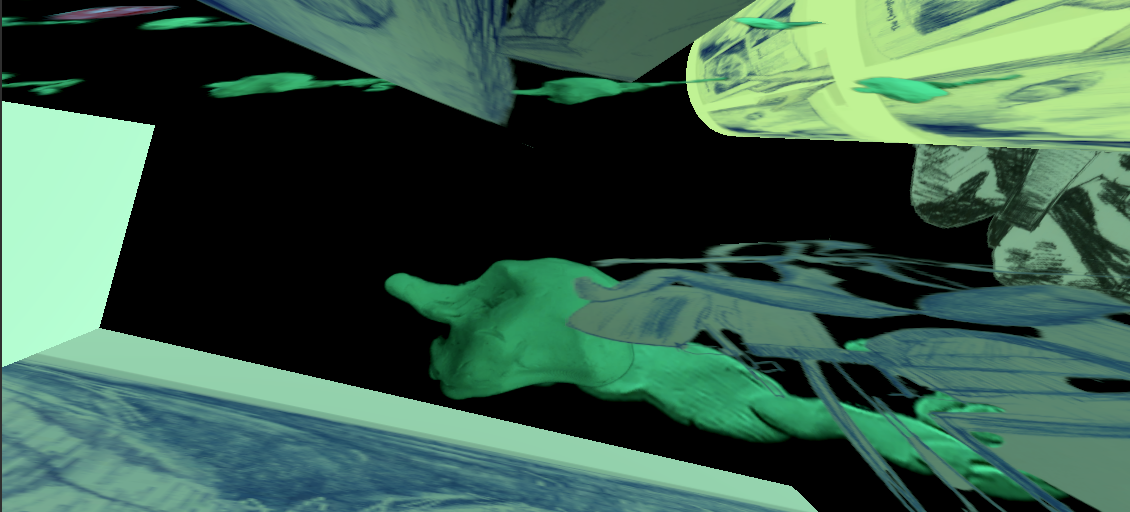
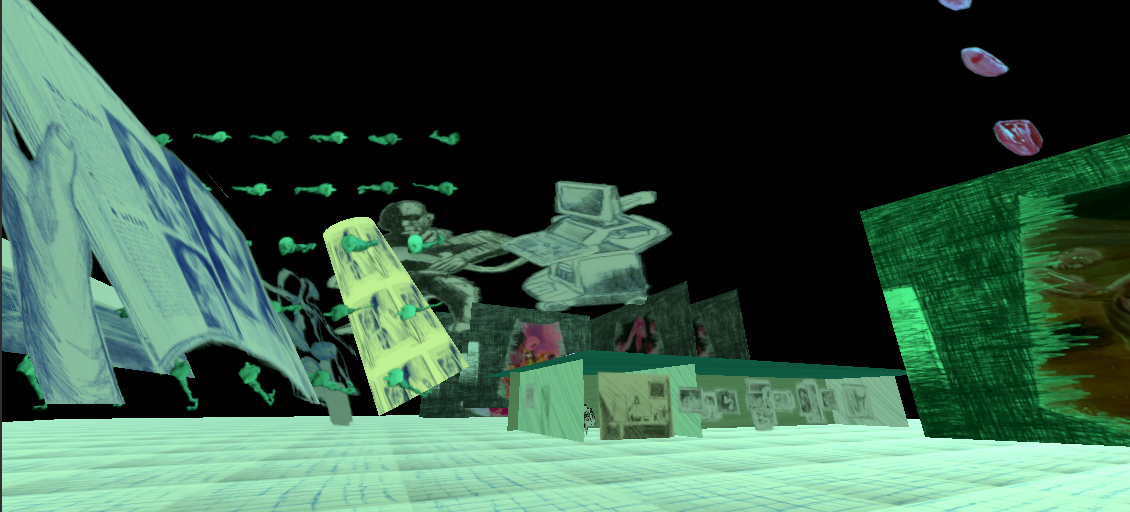
As you no-clip through the clinic walls after staring at a ballpoint pen painting, you enter the out-of-bounds void. Magazine cutouts of fetuses hover in midair. Ultrasound scans of paintings drift like corrupted textures, their hyperreal polish mimicking the slick authority of anti-abortion propaganda. Assets fragment. Frames flicker. Image files stutter across the horizon like broken renders abandoned by the system.
You catch glimpses of sprite sheets from inside the womb, arrays of IUDs and sperm frames, but even these so-called interior images have been displaced, floating outside the map. The space becomes an environment with missing collision, defined less by architecture than by the rules of visibility, by what can and cannot be rendered.
So what are the bounds of the womb?
They are membranes that fall away the moment the fetus is centered. Borders that vanish when the womb is rendered as a vessel rather than a living body. In reproductive imaging, the surrounding body is systematically cropped out so the fetus can appear isolated, luminous, and fully legible. This is not a neutral view. It is a visual construction produced through framing, extraction, and omission. The carrying body becomes static. Background. Noise.
But what happens if you keep going?
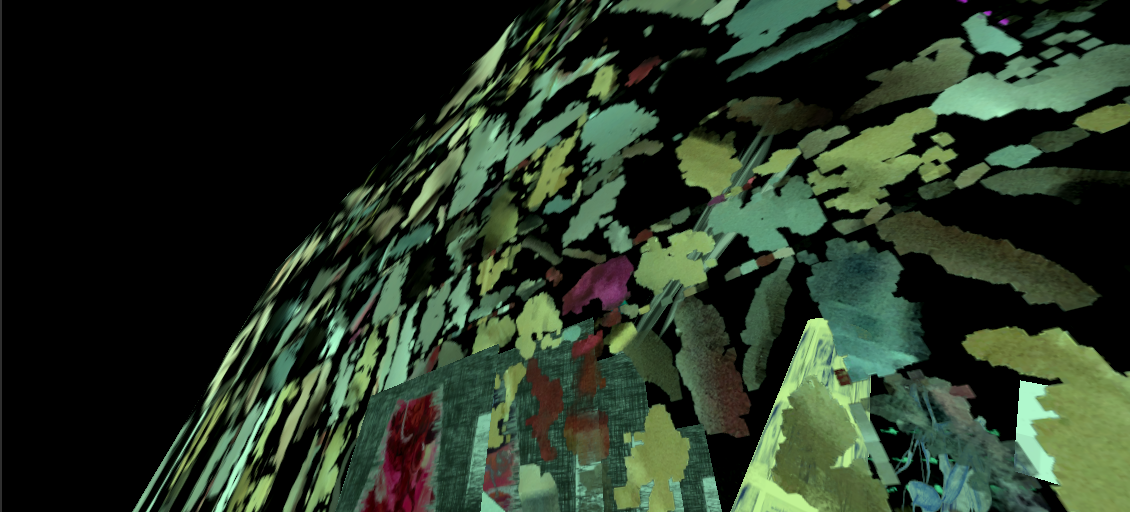
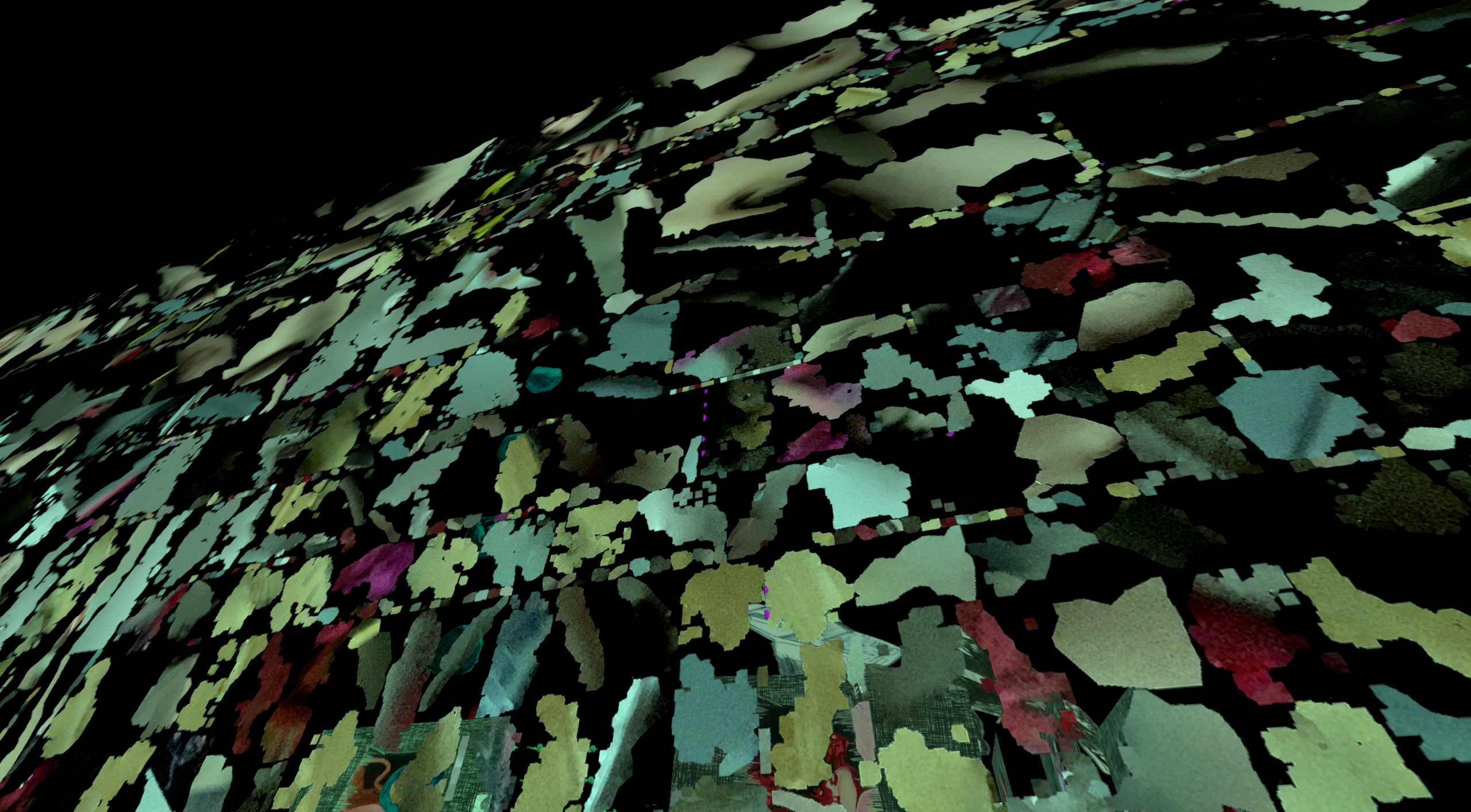
What happens if you move past the point where the image says there is nothing left to see, if you clip through the membrane and drift farther than the frame permits? You keep moving until you hit what first appeared to be empty space and realize it has a surface. A wall becomes visible only after you have already crossed into it, textured and waiting at the edge of the map. The void reveals itself not as emptiness, but as a limit produced by the image.
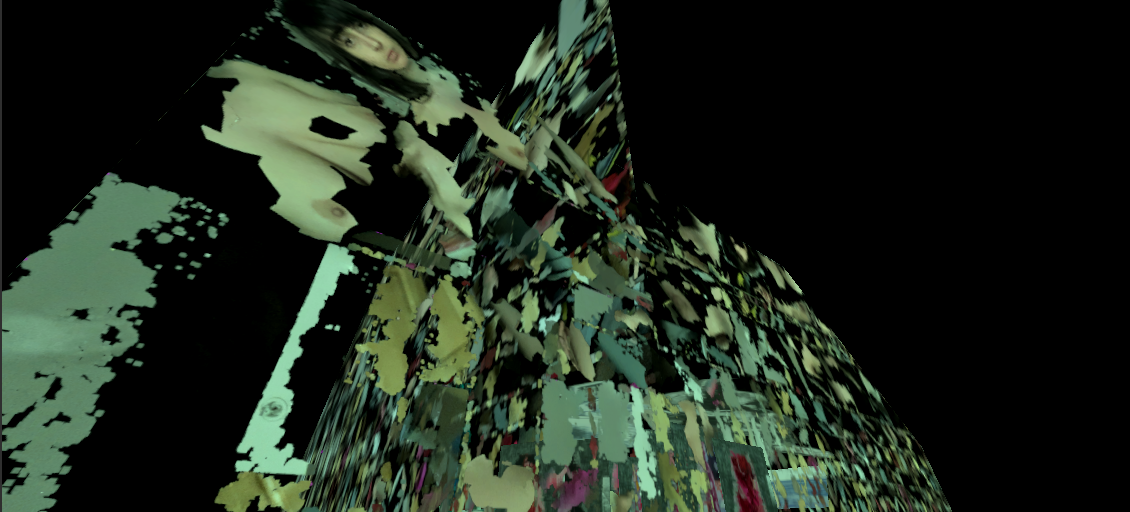
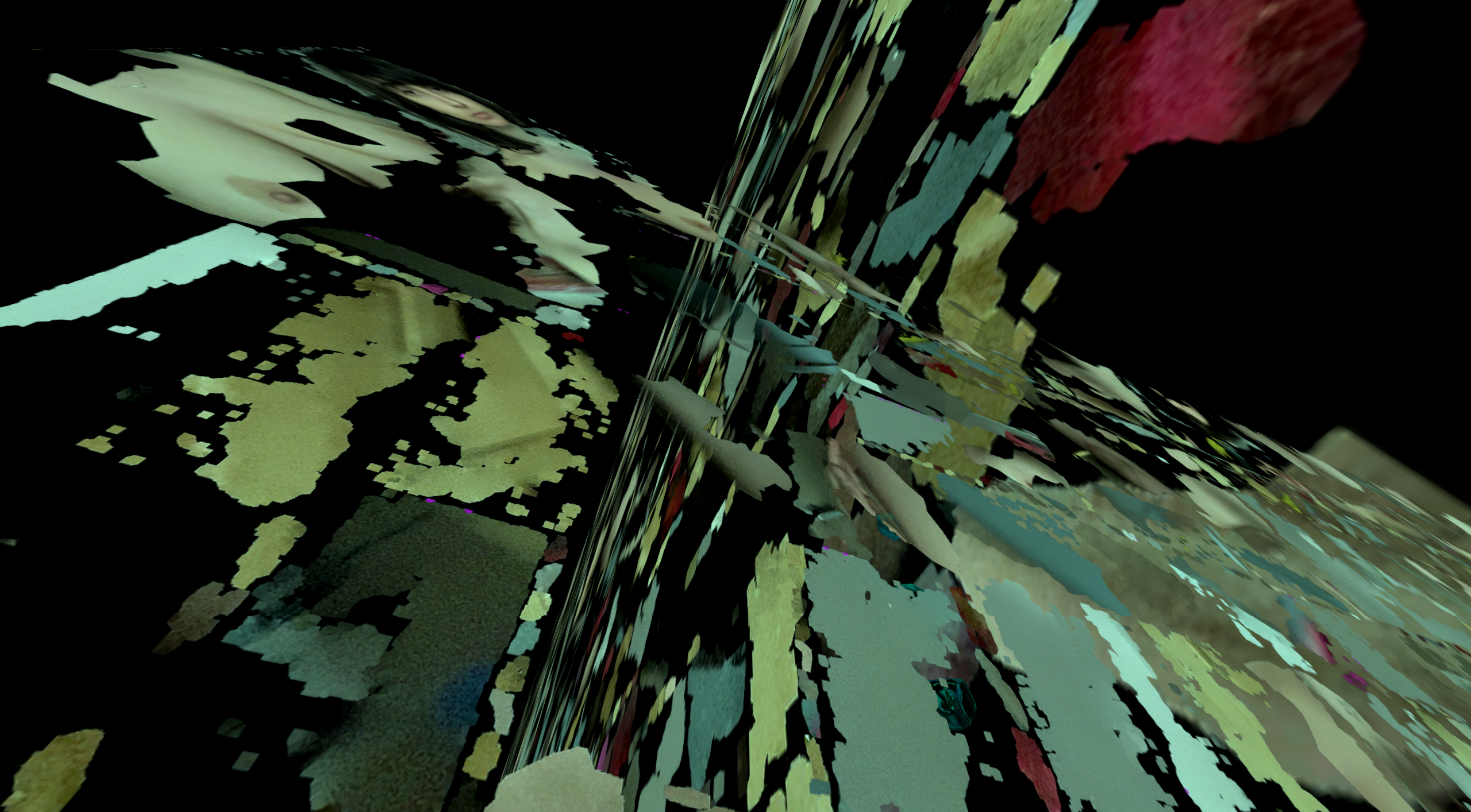
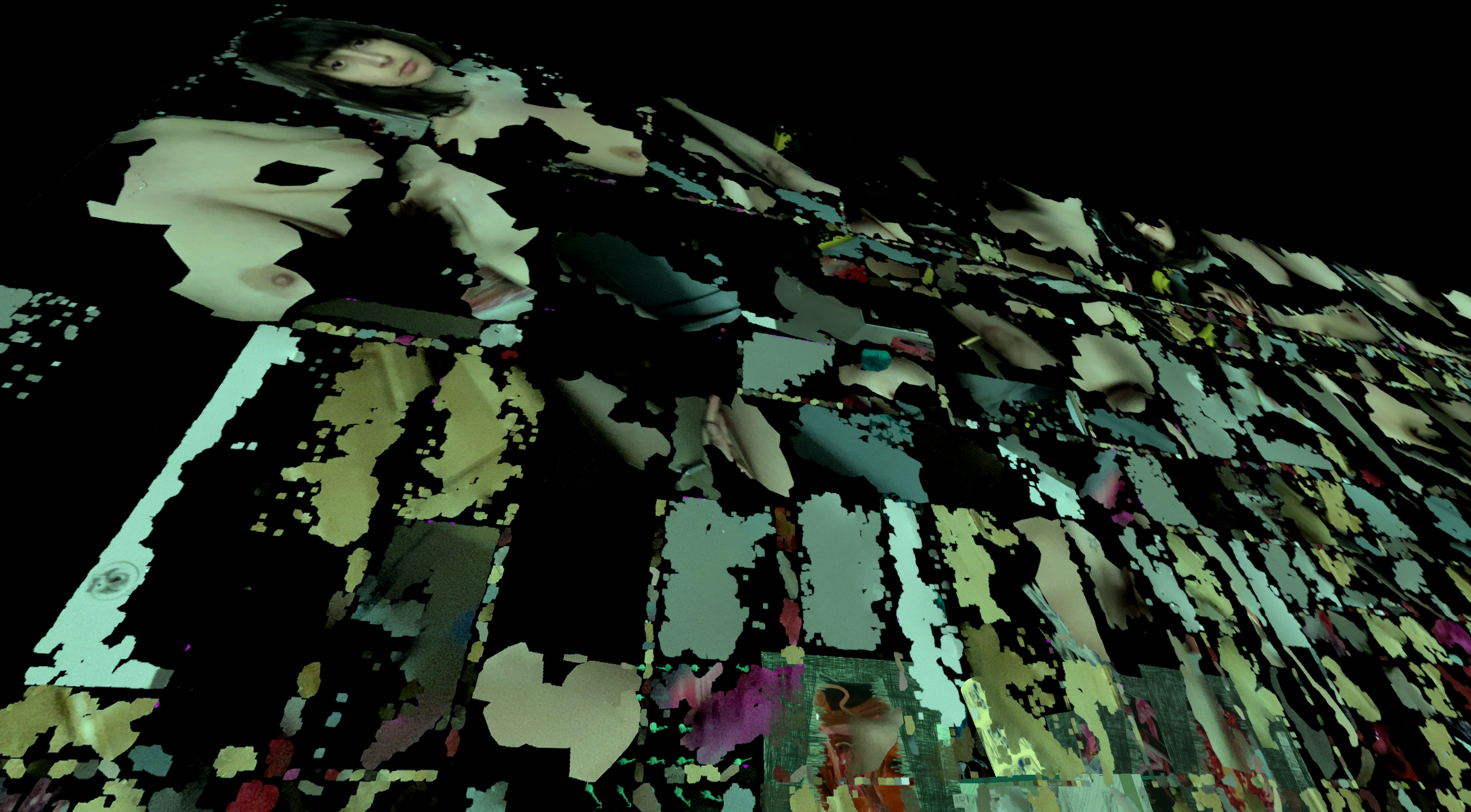
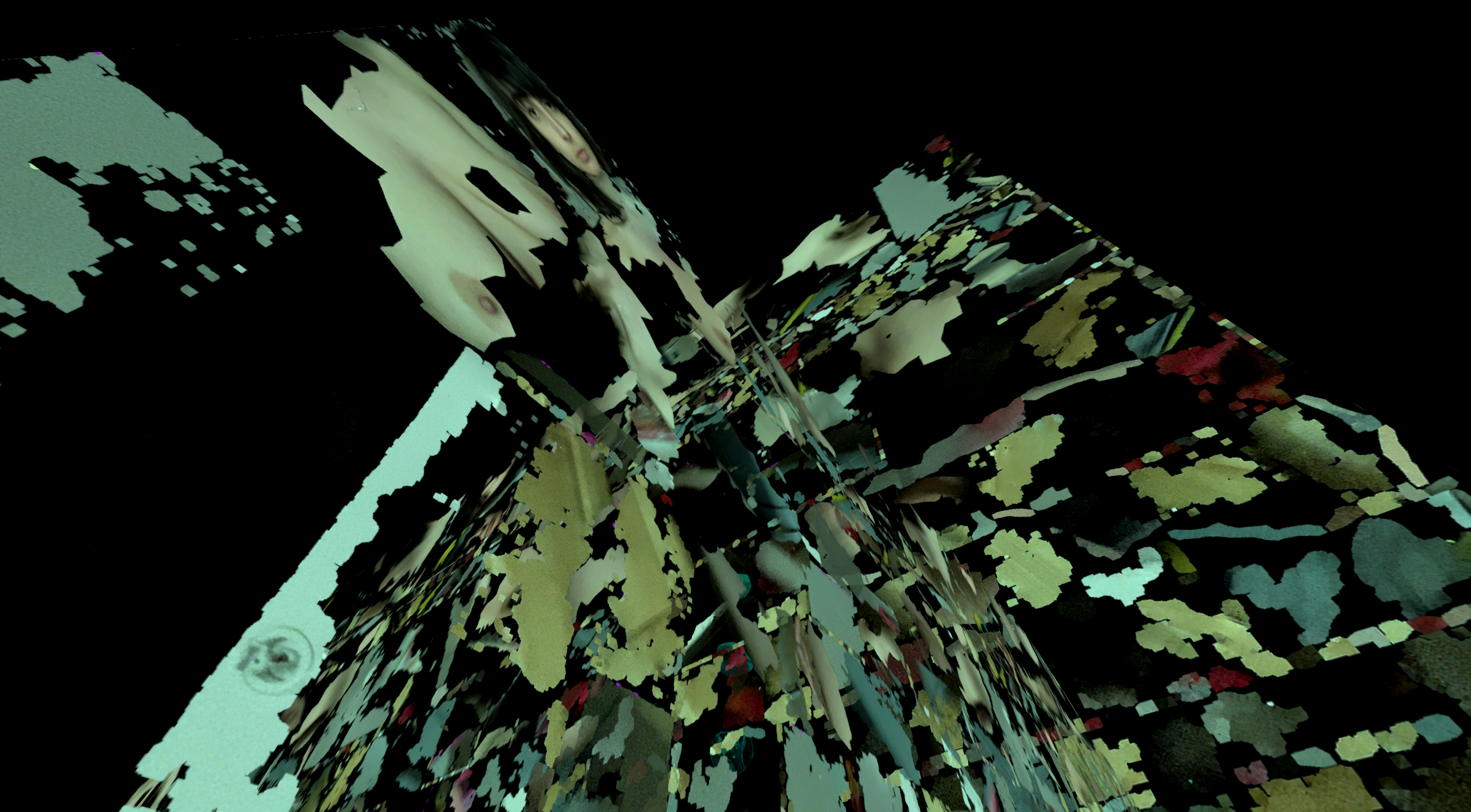
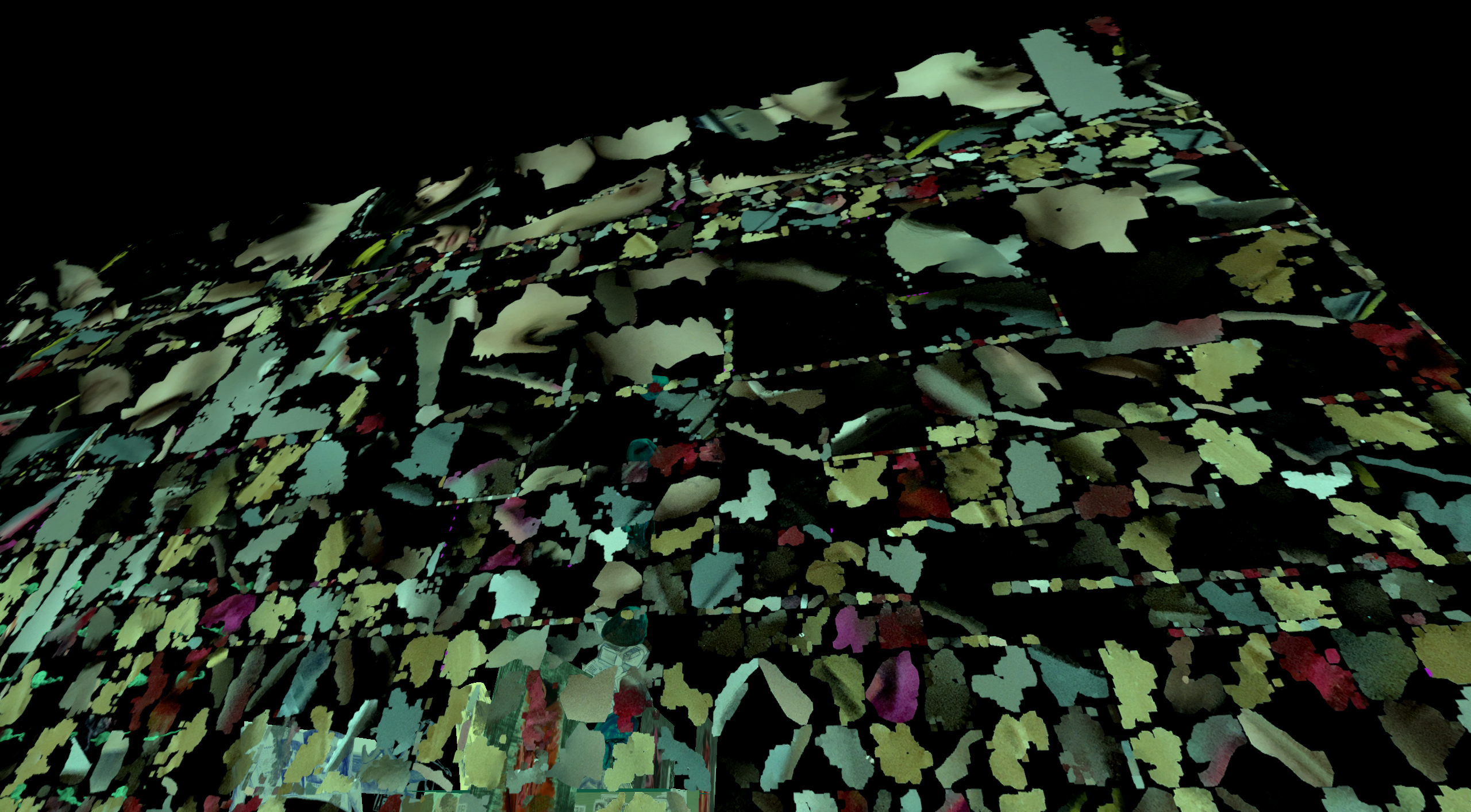
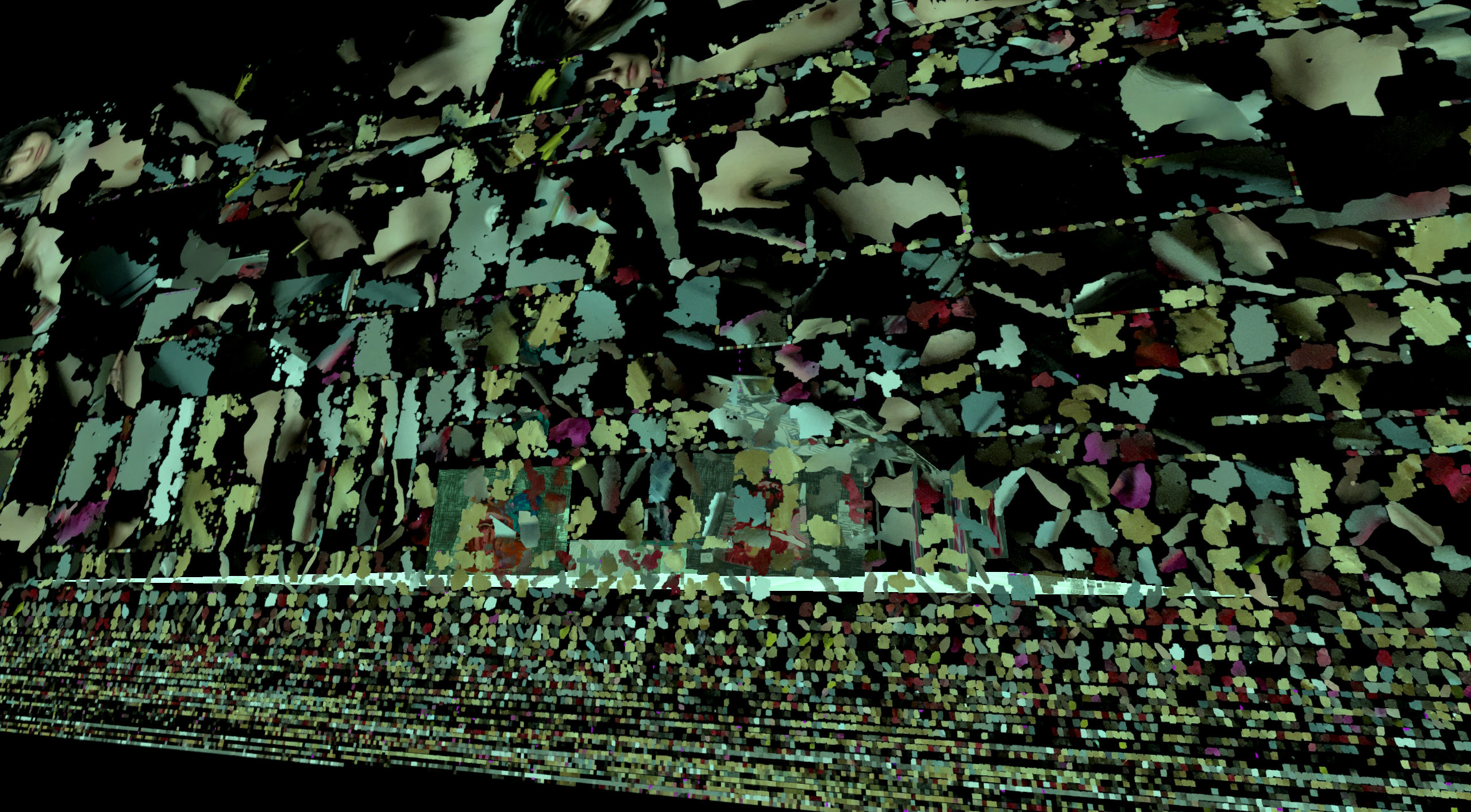
At first it looks like a broken PNG, a field of fractionalized fragments, pixelated up close and scattered across a flat plane. But as you move farther back, the pieces begin to resolve. Cut photographic textures, sorted into rectangular seams, form the flattened UV map of a body. It is a real physical body, naked, scanned, mapped, and made strangely two-dimensional. Breasts emerge. A face. Legs. Feet. All the parts reproductive imaging and anti-abortion imagery work to exclude in order to sustain the fiction of the fetus as self-contained.
The fractionalized 3D scan reveals that the so-called void was never empty. It was the cropped body all along, flattened into texture, pushed to the limits of the frame, and treated as support rather than subject. What appears out of bounds is not outside the image’s logic but the condition of its construction. The body returns not as backdrop, not as container, not as lack, but as the material ground that makes the image possible in the first place.