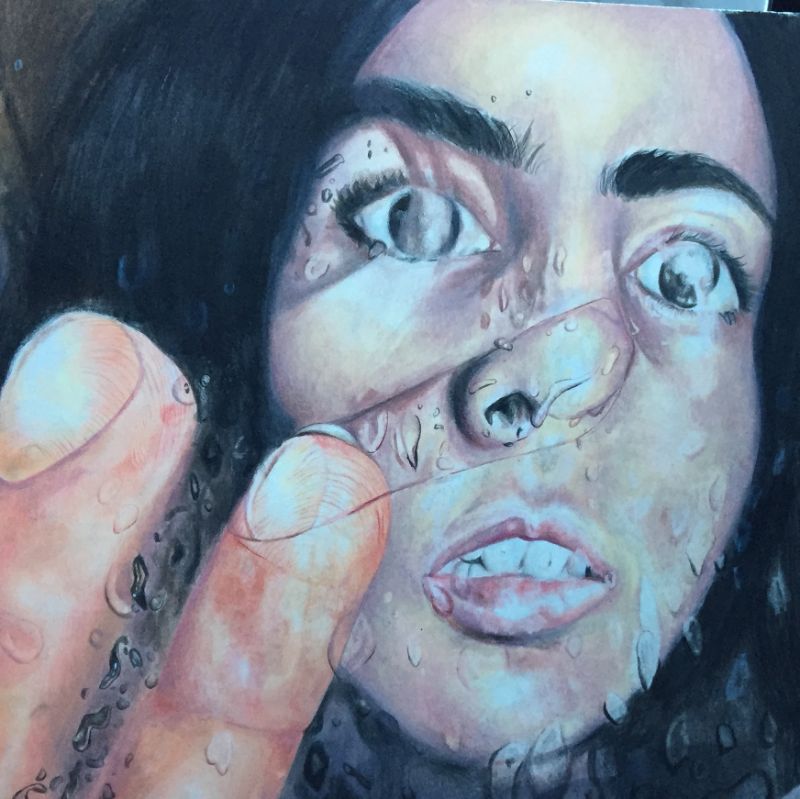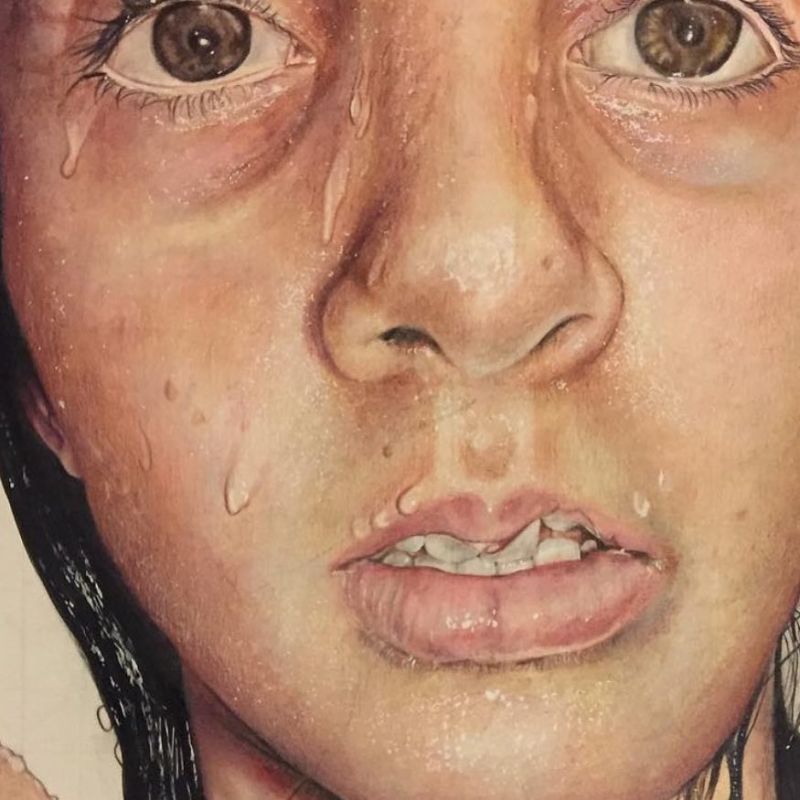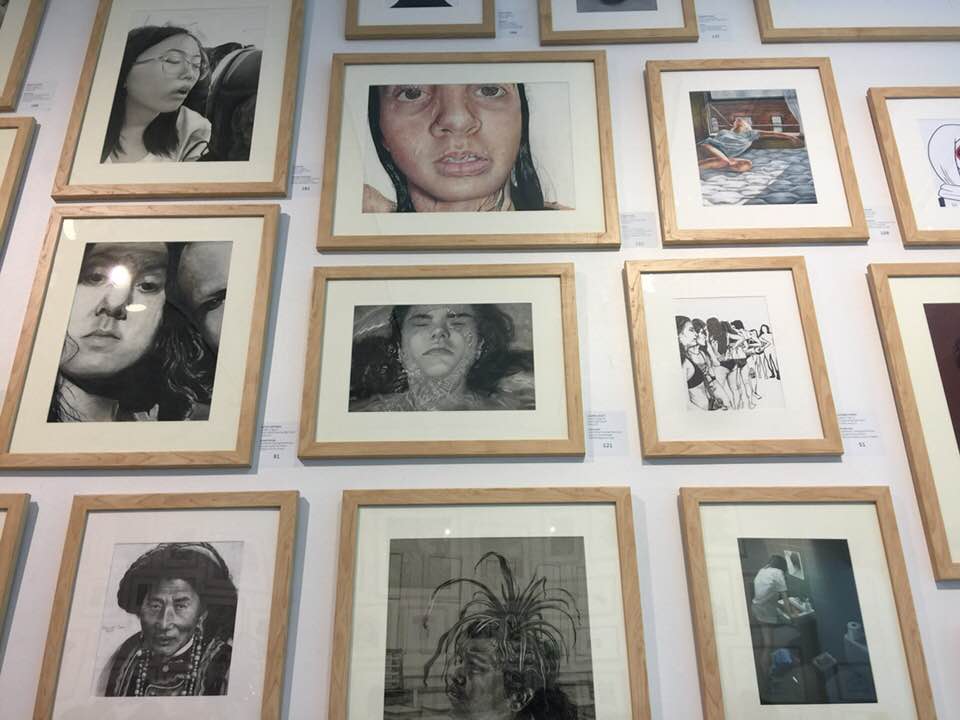
Across my work, I am interested in how the act of worldbuilding creates experiences of freedom and agency while simultaneously concealing the structures that limit them. I experiment with handmade and digital processes to expose these structures. I scan handmade paintings, drawings, prints, and sculptural objects into game engines, then transpose them into installations, while also using digital images and technologies as references for analog work. Brush marks, paper textures, imperfections, and traces of bodily labor remain visible within technologically mediated environments. Rather than positioning the analog and digital as opposites, I bring them together to interrupt the apparent neutrality and seamlessness of digital images. The process is reciprocal: digital simulations and physical surfaces iteratively shape one another. A glitch nudges the hand, the hand stains the code, and each pass reshapes the other.
I approach video games not simply as games but, as Bo Ruberg describes, as a practice of making worlds. Players enter these worlds expecting freedom, yet their actions are shaped by code, architecture, camera position, collision boundaries, and predetermined rules. What can be touched, where a body can move, what the camera reveals, and what remains outside the frame all express the priorities of the world’s maker. I use restriction, repetition, and disorientation to make players conscious of these systems and uncertain of where agency resides between player, avatar, camera, and developer. I am interested in how these systems mirror the structures of the physical world we live in. How much agency belongs to the individual, the mass, the camera that surveils us, technology itself, and those in power?
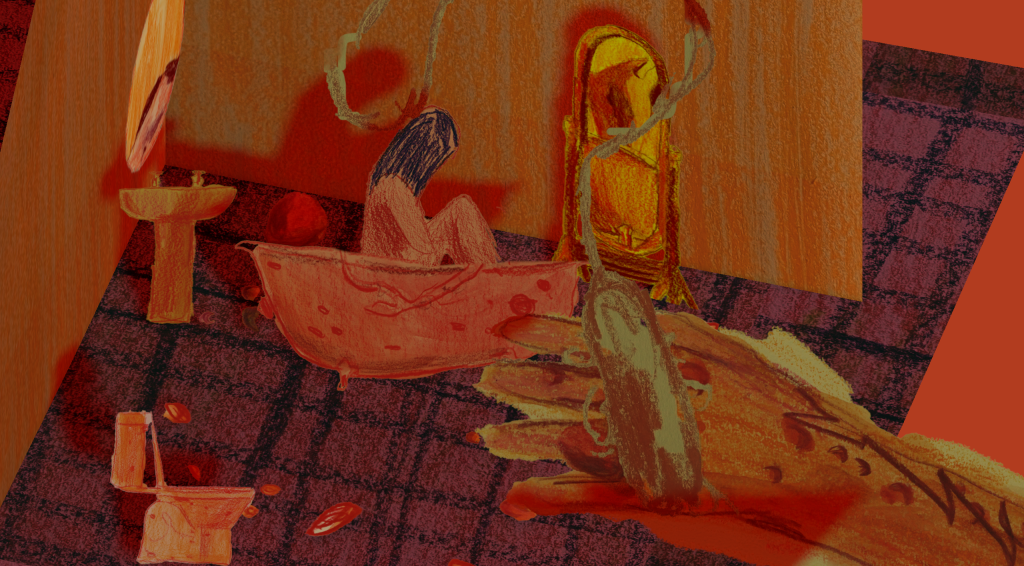
Each project develops these concerns through a different constructed world. Womb World examines how medical, political, and technological images frame the womb as a passive interior to be observed and controlled. Handmade imagery resists this reduction by presenting the womb as a complex, inhabited, three-dimensional world rather than a backdrop, as it is often depicted in anti-abortion imagery and science fiction. Text Textures destabilizes the distinction between player, avatar, and developer by questioning where agency resides when an avatar follows encoded behaviors. Escapist takes place within an apartment that cannot be exited, where technologies, fantasies, and habits that promise pleasure or release gradually become repetitive systems of confinement. The player is offered movement and choice, but remains restricted by closed walls, collisions, and the boundaries of the constructed world.
Across these works, the visible presence of the handmade interrupts the authority of the digital image, while restrictive mechanics interrupt the fantasy of unrestricted participation. I use worldbuilding to reveal freedom, embodiment, and agency not as neutral experiences, but as conditions produced by structures that are often designed to remain unseen.