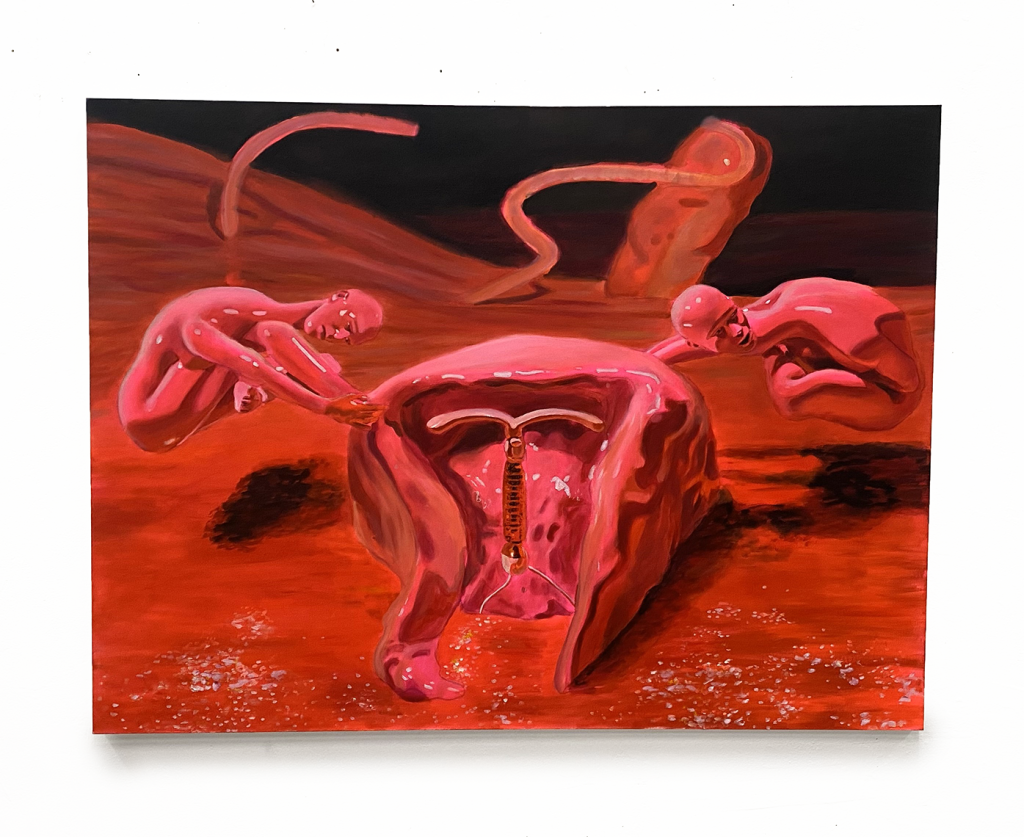
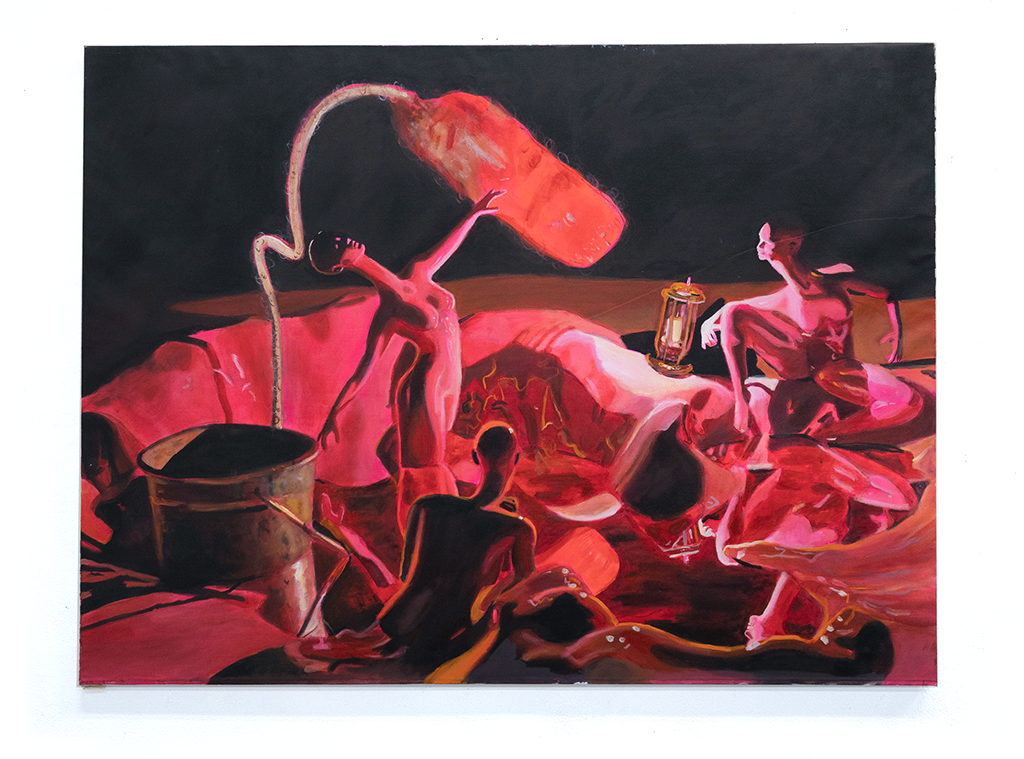
My work lives where paint and code meet, and I build Womb World through the logic of technological images. I model digital 3D interiors that behave like ultrasounds, digitized membranes that smooth the body flat. Ultrasound is not neutral footage. It is authored through angle, pressure, cropping, and interpretation, producing a “legible” body by deciding what counts as signal and what dissolves into noise. I borrow that clinical authority on purpose. My paintings adopt the hyperreal polish of anti-abortion and medical surveillance imaging, a visual language that manipulates feeling by presenting ideology as evidence rather than something to be read.
I am especially interested in how anti-abortion imagery relies on the power of the frame. In Lennart Nilsson’s A Child Is Born, the fetus is often detached from the carrying body and suspended in a blank void where cords, context, and consent disappear. The image’s association with technological advancement creates an impression of progress that discourages doubt, even as it performs political work. This is the core trick: what is out of frame becomes irrelevant, and the absent body becomes easier to control.
I counter that erasure through speculative worldbuilding. Instead of extracting a fetus into emptiness, I reframe the womb as foreground and setting, dense with labor, devices, fluids, and history. I populate these interiors with the fraught material culture of reproductive health: IUDs as characters, tampons as icons, Lysol as a lethal contraceptive, menstrual blood swelling into oceans, orgasm erupting like infrastructure. These renders become paintings where realism is both lure and critique. Up close, brushwork breaks the promise of neutrality. Unlike a digital image that appears instantly, painting requires time and touch. The canvas absorbs stains, revisions, and care, keeping the maker’s body present inside a visual language that often tries to erase it.